
Why Project F1 Still Matters Today
Before Lexus became synonymous with quiet luxury and near-flawless reliability, it was nothing more than an idea hidden deep inside Toyota’s headquarters. That idea was Project F1, a secret internal initiative that would go on to reshape the global luxury car market. Long before hybrid badges and electric transitions, Project F1 laid down principles of engineering discipline, obsessive refinement, and customer-first thinking that still define Lexus today.
Project F1 was not a marketing exercise, a rebrand, or an experiment. It was a clean-sheet challenge that asked a radical question for the late 1980s: could a Japanese automaker build the best luxury car in the world, better than Mercedes-Benz and BMW, without relying on heritage or prestige?
The answer changed automotive history.
The Global Automotive Landscape of the 1980s
In the early 1980s, the luxury car market was firmly controlled by European brands. Mercedes-Benz dominated the flagship sedan segment with the S-Class. BMW was establishing its reputation for performance-oriented luxury. Jaguar represented British elegance, though often paired with reliability concerns.
Japanese manufacturers, including Toyota, were known for affordability, efficiency, and durability. They excelled in compact cars and family sedans but were not taken seriously in the luxury space. The idea that Toyota could challenge Mercedes-Benz at the top end of the market was widely dismissed by industry insiders.
At the same time, the global economy was shifting. American consumers were becoming more receptive to high-quality Japanese products. Toyota leadership recognized a rare opening: luxury buyers wanted refinement and performance, but they were increasingly frustrated with high ownership costs, inconsistent reliability, and dated customer service experiences.
This environment set the stage for a bold internal proposal that would soon be known as Project F1.
What Was Project F1? Flagship One Explained
Project F1 stood for Flagship One, not Formula One. The name reflected its objective: to create a no-compromise flagship luxury sedan that would exceed every benchmark set by the world’s best cars.
Unlike typical vehicle programs, Project F1 was conducted in near-total secrecy. Toyota avoided public announcements, press leaks, or early branding. The initiative was not about improving an existing Toyota model. Instead, it aimed to build something entirely new, from drivetrain architecture to dealership experience.
The project officially began in 1983 under the direction of Toyota chairman Eiji Toyoda. Hundreds of engineers, designers, and planners were assembled into a standalone team. Their instruction was deceptively simple but extremely demanding: build the finest luxury car in the world, regardless of cost, and do it without copying anyone else.
That directive would push Toyota beyond anything it had attempted before.
The Engineering Goals Behind Project F1
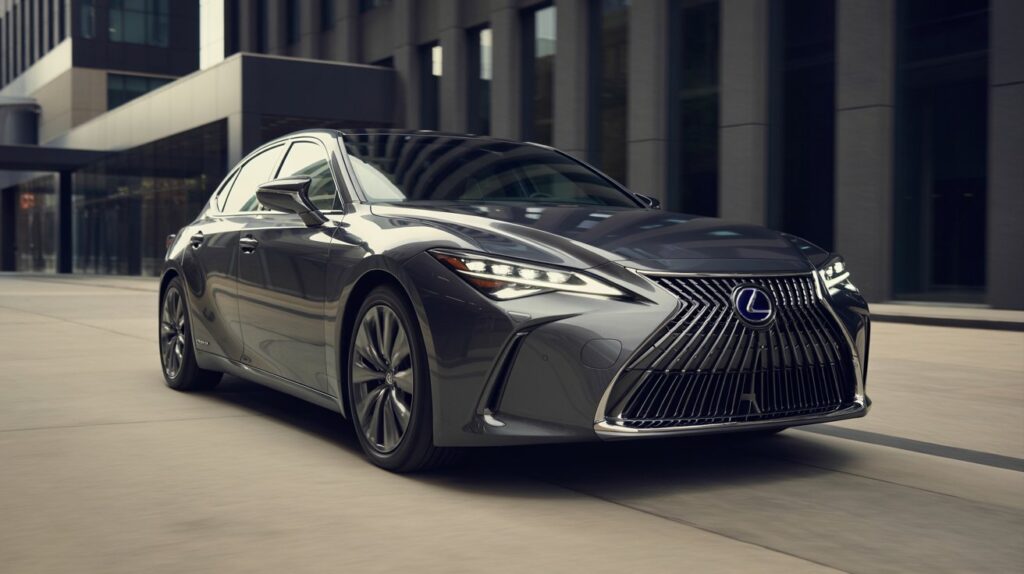
From the outset, Project F1 rejected incremental improvement. The team established specific, measurable goals that targeted the weaknesses of existing luxury cars.
Ride quality had to surpass the Mercedes-Benz S-Class. Interior noise levels had to be lower than any production sedan on the market. The engine needed to deliver smooth, effortless power while maintaining long-term reliability far beyond European standards. Aerodynamics had to support high-speed stability without sacrificing elegance or fuel efficiency.
Perhaps most ambitious was the cost target. Toyota wanted to undercut European rivals on price while delivering superior build quality. That requirement forced engineers to rethink manufacturing tolerances, materials sourcing, and assembly techniques.
Every subsystem was scrutinized. Door hinges were redesigned repeatedly to achieve a precise closing sound. Climate control systems were tested across extreme temperatures to maintain silent, consistent airflow. Even the placement of dashboard switches was debated to reduce driver fatigue.
This level of obsession became a defining trait of Lexus engineering.
The LS 400: Project F1’s Physical Result
After years of development, Project F1 produced its first tangible result: the Lexus LS 400. Introduced in 1989, the LS 400 was not visually radical. Its design was intentionally restrained, favoring proportion and balance over ornamentation.
Under the hood was the all-new 4.0-liter 1UZ-FE V8 engine, developed exclusively for this program. It delivered smooth, linear power with exceptional durability, quickly earning a reputation as one of the most reliable V8 engines ever built.
Inside, the LS 400 showcased craftsmanship that shocked reviewers. Panel gaps were uniform. Materials felt dense and carefully selected. Controls operated with a damped precision rarely seen at the time. Most notably, the cabin was extraordinarily quiet, even at highway speeds.
When tested against European rivals, the LS 400 matched or exceeded them in acceleration, fuel efficiency, and refinement, while costing thousands less.
Testing at an Unprecedented Scale
Toyota did not rely on simulations or limited prototype testing. Project F1 involved one of the most exhaustive validation programs in automotive history.
Prototypes were driven millions of miles across deserts, snow-covered roads, high-speed autobahns, and urban traffic centers. Engineers monitored not only mechanical durability but also long-term comfort and noise degradation.
Comparison testing was relentless. Engineers benchmarked the LS prototype against Mercedes-Benz and BMW models repeatedly, adjusting suspension tuning, steering response, and drivetrain calibration until their targets were met or surpassed.
Failures were treated as learning opportunities rather than setbacks. Components that did not meet expectations were redesigned without hesitation, regardless of cost or timeline impact.
This approach would later become central to Lexus’s reputation for long-term reliability.
The Birth of Lexus as a Brand
As Project F1 neared completion, Toyota faced a crucial decision. Selling the LS 400 as a Toyota would undermine its mission. The company realized that luxury buyers associated the Toyota name with economy and practicality, not prestige.
The solution was to create an entirely new brand: Lexus.
Lexus was not just a badge. It came with a new dealer network, specialized sales training, and customer service standards that exceeded industry norms. Dealerships focused on hospitality, transparency, and after-sales support in ways that were uncommon at the time.
This holistic approach ensured that the ownership experience matched the engineering excellence of the car itself.
Market Impact and Industry Shockwaves
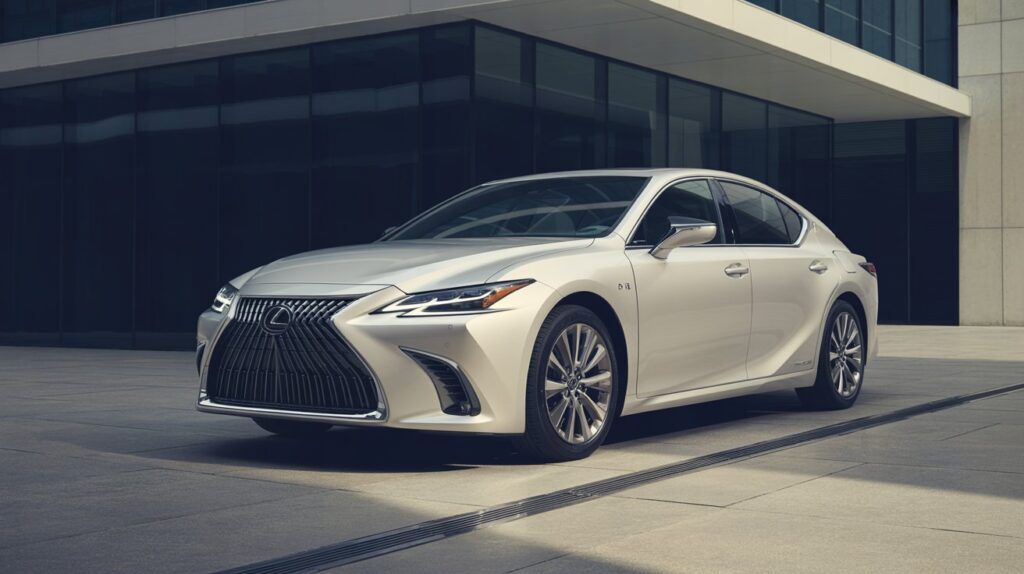
When the Lexus LS 400 launched in the United States in 1989, the response was immediate and disruptive. Reviewers praised its refinement, build quality, and value proposition. Consumers flocked to dealerships, often switching from established luxury brands.
European manufacturers were caught off guard. Mercedes-Benz and BMW were forced to accelerate improvements in quality control and customer service. Pricing strategies across the luxury segment shifted as buyers recalibrated their expectations.
Project F1 had accomplished something unprecedented: it redefined what luxury meant, not through heritage, but through execution.
Project F1’s Long-Term Influence on Lexus Engineering
The principles established during Project F1 did not end with the LS 400. They became embedded in Lexus’s engineering culture.
Every subsequent Lexus model, from the ES to the flagship LS, inherited an emphasis on refinement, durability, and customer satisfaction. Engineers were trained to prioritize real-world usability over marketing-driven features.
This philosophy also influenced Lexus’s approach to powertrain evolution. When the brand transitioned into hybrids and later electrification, the same standards of smoothness and reliability applied. Modern Lexus vehicles continue to reflect the mindset forged during Project F1.
This evolution can be seen clearly in the brand’s electric and hybrid strategy today, as Lexus applies its original refinement-first approach to new propulsion technologies. A clear example of this philosophy carried forward is explored in Lexus’s modern electric luxury strategy, as discussed in the 2026 Lexus ES 350e.
Project F1’s Relevance in the Modern Lexus Era
While the automotive industry now focuses on electrification, autonomy, and software, the core challenge remains unchanged: delivering a superior ownership experience.
Project F1’s lessons are more relevant than ever. Electric vehicles amplify NVH concerns, making quiet cabins and smooth power delivery even more critical. Customer trust, built through reliability and support, remains a competitive advantage.
Lexus continues to leverage Project F1’s legacy by applying meticulous development processes to modern platforms, ensuring that technological advancement does not come at the expense of comfort or durability.
Common Myths and Misconceptions About Project F1
One of the most persistent misconceptions is that Project F1 refers to Formula One racing. In reality, Toyota’s racing efforts were entirely separate from this luxury car program.
Another myth suggests that Project F1 was financially reckless. While the investment was substantial, Toyota approached the program strategically, viewing it as a long-term brand-building initiative rather than a short-term profit play.
Finally, some believe Project F1 succeeded purely because of lower pricing. In truth, the LS 400 succeeded because it delivered genuine quality and refinement that matched or exceeded its competitors.
Frequently Asked Questions About Project F1
What does Project F1 stand for at Lexus?
Project F1 stands for Flagship One, referring to Toyota’s goal of creating a world-class flagship luxury sedan.
Was Project F1 successful immediately?
Yes. The Lexus LS 400 received widespread critical acclaim and strong sales from its launch.
Why didn’t Toyota sell the LS 400 as a Toyota?
Toyota believed a new luxury brand was necessary to overcome market perceptions and deliver a premium ownership experience.
Is Project F1 still influencing Lexus today?
Absolutely. The engineering principles and customer-first philosophy established during Project F1 remain central to Lexus.
Did Project F1 change the luxury car market permanently?
Yes. It forced established brands to improve quality, reliability, and customer service standards.
Conclusion: Project F1 as One of the Most Important Automotive Programs Ever
Project F1 was more than a vehicle development program. It was a statement of intent that proved luxury could be engineered, not inherited. By prioritizing quality, refinement, and customer satisfaction above all else, Toyota created Lexus and permanently altered the luxury automotive landscape.
Decades later, the echoes of Project F1 can still be felt in every Lexus model. Its legacy serves as a reminder that true innovation often comes from quiet determination rather than loud ambition.
Pingback: 2026 Lexus LC 500 Convertible: Luxury V8 Grand Touring Refined -