
Peugeot is accelerating its electric vehicle strategy, preparing to launch a diverse range of EVs between 2025 and 2026. This period is pivotal as the French automaker introduces performance-oriented SUVs, compact city cars, and even iconic GTi variants in electric form. Peugeot’s push reflects the broader industry shift toward electrification and its ambition to maintain a strong competitive position in Europe and beyond. The upcoming lineup showcases Peugeot’s commitment to blending driving enjoyment with sustainability. From urban-friendly models to family SUVs, the brand aims to appeal to both mainstream and enthusiast drivers. This article explores the verified upcoming Peugeot EVs, their features, performance, and significance for the evolving EV market.
Table of Contents
Overview of Peugeot’s 2025–2026 EV Strategy
Peugeot has outlined an ambitious EV roadmap, emphasizing innovation and performance. Highlights from E‑Lion Day 2025 reveal a focus on dual-motor powertrains, advanced digital interfaces, and expanded battery ranges. The automaker’s Electric Promise includes an eight-year battery warranty, vehicle cover, and access to on-the-go charging credits, offering customers reassurance as they transition to electric driving. Peugeot plans to introduce at least 12 fully electric models globally, spanning compact cars, SUVs, and performance variants. The upcoming models leverage Stellantis’ multi-platform strategy, including the new STLA Small platform for compact EVs, ensuring scalable architecture and improved battery integration.
Key Upcoming EV Models
Peugeot E‑408
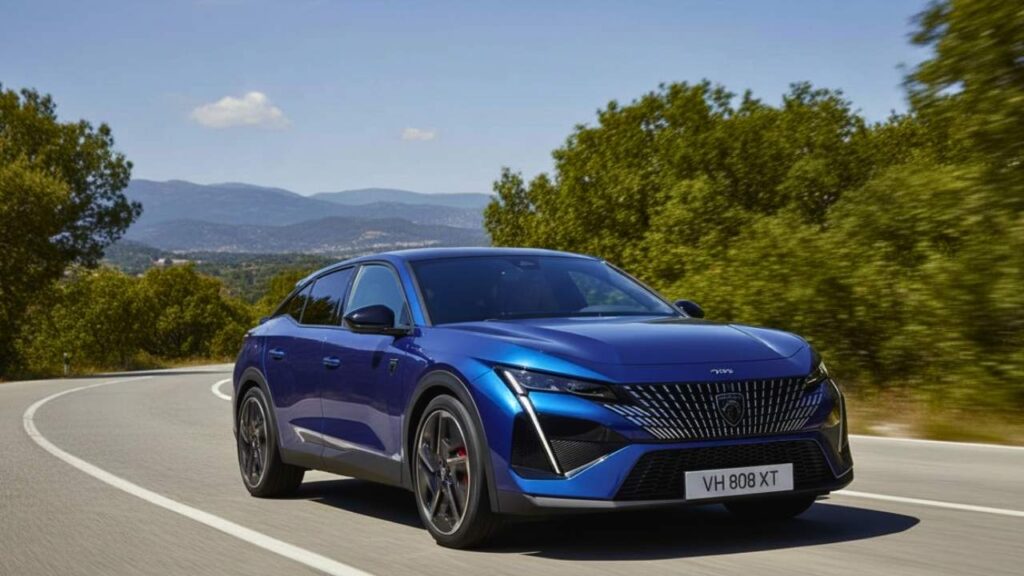
The Peugeot E‑408 fastback EV represents Peugeot’s entry into the electric saloon and fastback segment. It features a front-mounted electric motor delivering around 210 PS and a 58.2 kWh battery for the base version. WLTP range estimates suggest around 400 km, with potential for future long-range variants. The E‑408 bridges the gap between traditional hatchbacks and sedans, offering a stylish design, practical interior space, and efficient performance. Its launch is expected to mark a key step in Peugeot’s EV expansion, catering to drivers seeking a combination of aesthetics, technology, and eco-friendliness.
Peugeot E‑3008 Dual Motor (325 hp)
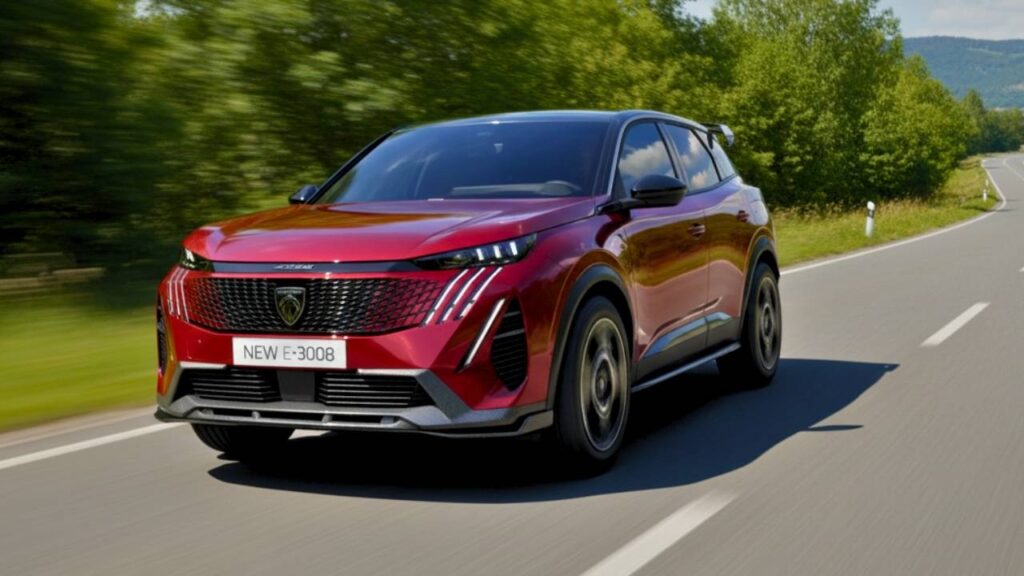
The E‑3008 Dual Motor introduces high-performance electric SUV capabilities to Peugeot’s lineup. Equipped with a 213 hp front motor and 112 hp rear motor, this AWD setup produces a combined 325 hp. It accelerates from 0–62 mph in approximately six seconds, showcasing that Peugeot can deliver spirited performance in an electric SUV. Battery capacity stands at 73 kWh usable, offering a WLTP range of roughly 303 miles in Normal mode. Charging from 20–80% on a DC fast charger takes around 30 minutes, supporting practical long-distance travel. The Launch Edition trim features premium interior materials, digital i‑Cockpit interface, and advanced driver-assist technology. This SUV underscores Peugeot’s commitment to combining performance, technology, and family-friendly usability in its EV portfolio.
Peugeot E‑5008 Dual Motor (325 hp)
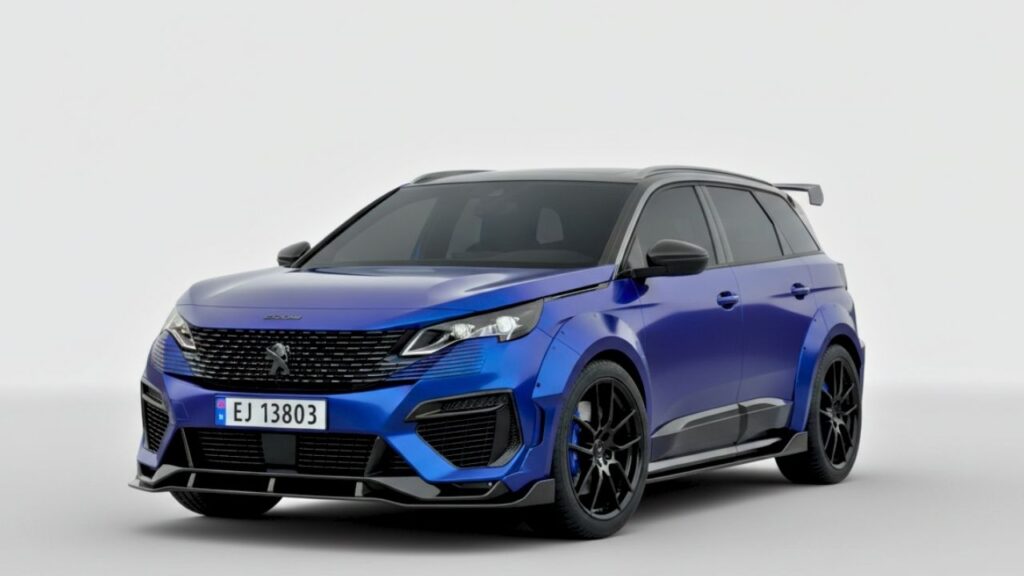
The E‑5008 Dual Motor mirrors the E‑3008’s dual-motor architecture, delivering 325 hp and AWD performance. It completes 0–62 mph in approximately 6.5 seconds and offers a WLTP range of about 289 miles. Peugeot’s 5‑seater version, launching in early 2025, provides a 994 L boot capacity, highlighting its practicality for families. The Launch Edition adds refined interior features, digital controls, and connectivity options. The E‑5008 Dual Motor serves as a premium family SUV while embracing Peugeot’s performance-driven EV ethos.
Peugeot 208 (Next-Gen / 2026 EV)
The next-generation Peugeot 208, arriving in 2026, will be EV-only, built on the STLA Small platform. This compact city car features a tech-forward cabin, including a square steering wheel and next-generation i‑Cockpit interface. The 208 EV aims to deliver urban agility, efficiency, and connectivity, positioning it competitively against city-focused EVs like the Renault Zoe and Volkswagen ID.2. While battery specifications are yet to be fully confirmed, the new 208 will be central to Peugeot’s strategy for mainstream EV adoption.
Peugeot E‑308 (New-Gen / Facelift)
The E‑308 marks the electrification of Peugeot’s popular compact hatchback. The new generation supports electrified variants with a WLTP range of approximately 450 km. DC fast charging is supported up to 100 kW, with Plug & Charge functionality expected in spring 2026. This model combines familiar hatchback practicality with modern EV technology, making it an appealing choice for both families and daily commuters looking for efficient and reliable electric mobility.
Peugeot E‑208 GTi
Peugeot is reviving the iconic GTi badge in electric form with the E‑208 GTi. Reported to deliver 280 hp from its electric motor, it features a 54 kWh battery offering a WLTP range of approximately 217 miles. Fast charging at 100 kW allows 20–80% in roughly 30 minutes. Visually, the E‑208 GTi retains red accents, a widened track, and retro-inspired design cues, blending sporty styling with modern electric performance. This model aims to appeal to enthusiasts seeking excitement and fun in an urban EV package.
Peugeot EV Technology & Innovation (2025–2026)
Peugeot’s upcoming EVs integrate several technological advances:
- Dual-Motor AWD in 3008 and 5008 for performance and traction
- STLA Small platform for compact EVs, enhancing battery efficiency and scalability
- Next-Generation i‑Cockpit with digital displays, ergonomic controls, and enhanced connectivity
- Electric Promise warranty: 8-year battery and vehicle cover, plus on-the-go charging access
These innovations aim to combine driver engagement with practical usability and peace of mind for EV owners.
Market & Strategic Implications
Peugeot’s 2025–2026 EV strategy positions it to compete strongly in the European market and beyond. Its lineup spans compact city cars, family SUVs, and performance models, addressing multiple segments. Competitors include Volkswagen’s ID series, Renault’s electric hatchbacks and SUVs, and Hyundai’s Ioniq and Kona EVs. While Peugeot’s EV technology is advanced, potential challenges include battery supply constraints, scaling production, and delivering real-world range that meets WLTP claims. The diversified EV portfolio allows Peugeot to cater to both mainstream buyers and enthusiasts, supporting brand growth and long-term electrification goals.
Pros and Cons of Peugeot’s Upcoming EVs
Pros
- Comprehensive EV lineup covering multiple segments
- High-performance dual-motor options for SUVs
- Advanced digital cockpit and interior technology
- Strong warranty and support with Electric Promise
Cons - Some performance and range specs are manufacturer-claimed, may differ in real-world conditions
- Pricing outside Europe has not yet been published
- New platforms and dual-motor systems may face early production challenges
- Some models, such as long-range E‑408 variants, remain speculative
Conclusion
Peugeot’s 2025–2026 EV lineup is a clear statement of intent. Key models like the E‑408, E‑3008 Dual Motor, E‑5008 Dual Motor, next-gen 208, E‑308, and E‑208 GTi highlight the brand’s commitment to performance, practicality, and urban-friendly design. This period represents a transformative phase for Peugeot, blending legacy styling with modern EV technology and competitive range options. Buyers and enthusiasts alike should keep a close watch on delivery timelines, reviews, and real-world performance as these models reach showrooms.
FAQ
1. What new electric Peugeot models are coming in 2025–2026?
The lineup includes the E‑408 fastback, E‑3008 Dual Motor, E‑5008 Dual Motor, next-gen 208 EV, E‑308, and the E‑208 GTi performance hatch.
2. What does “Dual Motor 325 hp” mean in Peugeot EVs?
It refers to two electric motors—one on the front axle and one on the rear—producing a combined 325 hp and enabling all-wheel drive performance.
3. What is the WLTP range of the new E‑3008 and E‑5008 Dual Motor models?
The E‑3008 offers approximately 303 miles, while the E‑5008 provides around 289 miles in Normal driving mode.
4. Is there a performance version of the Peugeot e‑208?
Yes, the E‑208 GTi offers 280 hp, sporty styling, and a WLTP range of roughly 217 miles, reviving the classic GTi badge in electric form.
5. What warranty and charging benefits does Peugeot offer for its EVs?
Through the “Electric Promise,” Peugeot provides an 8-year battery warranty, vehicle cover, and access to on-the-go charging credits.
6. Will Peugeot’s new EVs be affordable and available globally?
While some models target mainstream affordability, pricing outside Europe is yet to be confirmed, and rollout may vary by region.
Internal Link Placement:
Readers can explore detailed specifications of the Peugeot E‑408 fastback EV when learning about this 2025 model.
Pingback: Are Mercedes Reliable? A Data-Driven Look at Ownership, Longevity, and Real-World Costs -