
The Dodge Avenger, produced from 2008 to 2014, represented Dodge’s bold attempt at revitalizing the midsize sedan market. With a striking design, multiple engine options, and competitive pricing, the Avenger offered an appealing alternative to mainstream rivals like the Honda Accord and Toyota Camry. While it never achieved the popularity of some competitors, it carved out a unique niche for buyers seeking American styling and varied performance choices. In this review, we’ll explore the Avenger’s specs, performance, features, and overall ownership experience.
Pricing and Market Value
When new, the Dodge Avenger’s pricing ranged depending on trim and engine configuration. The base 2.4L I4 SE started around $19,000, while fully loaded V6 models like the R/T could reach approximately $27,000. Over the years, optional packages and special editions slightly increased the price.
In today’s used car market, 2008–2014 Dodge Avengers can be found from $4,000 to $12,000, depending on mileage, condition, and trim level. Factors such as service history, accident records, and engine choice significantly influence resale value.
Engine and Performance
The Dodge Avenger offered multiple engines throughout its production run:
- 2.4L I4: The base engine produced around 173 hp and 166 lb-ft of torque, paired with a four-speed automatic or CVT.
- 2.7L V6: Early models offered a 2.7L V6 with 189 hp and 190 lb-ft torque.
- 3.5L V6: Available in mid-range trims, this engine generated 235 hp and 232 lb-ft torque.
- 3.6L V6 Pentastar: Introduced in later models (2011–2014), delivering 283 hp and 260 lb-ft torque with a six-speed automatic, offering a more spirited driving experience.
Acceleration and Top Speed
Performance varied significantly with the engine. The 2.4L I4 achieved 0–60 mph in about 9.2 seconds, while the 3.6L V6 could reach 60 mph in just 6.7 seconds. Top speed ranged from 115 mph for the base engine to 135 mph for the 3.6L V6 models. Driving impressions noted that the V6 variants provided smooth acceleration, while the four-cylinder models were better suited for daily commuting.
Fuel Economy
EPA ratings for the Avenger depended on the engine and drivetrain:
- 2.4L I4: 21 mpg city / 30 mpg highway
- 2.7L V6: 18 mpg city / 27 mpg highway
- 3.5L V6: 19 mpg city / 28 mpg highway
- 3.6L V6: 19 mpg city / 29 mpg highway
While not class-leading, the Avenger offered competitive efficiency for an American midsize sedan of its era.
Exterior Design
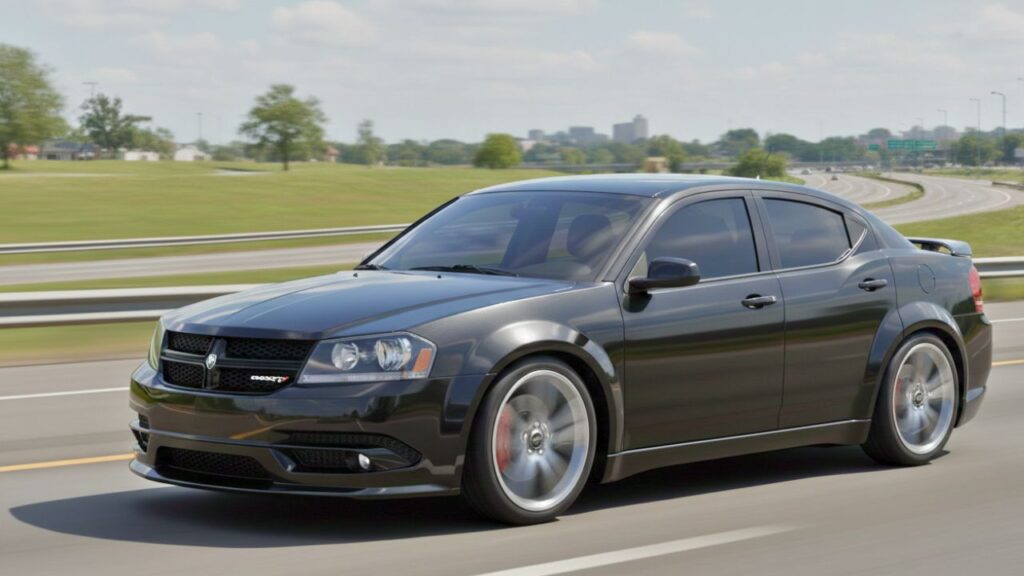
The Avenger stood out with a bold and angular exterior, featuring a crosshair grille that became a Dodge signature. Early models emphasized a more aggressive stance, while the 2011 facelift softened lines slightly and updated the front fascia and headlights. Alloy wheels ranged from 16 to 18 inches, and optional sunroofs added a touch of luxury. Overall, the Avenger balanced American muscle-inspired styling with practical midsize proportions.
Interior and Comfort
Inside, the Dodge Avenger offered a spacious cabin, accommodating five passengers comfortably. Material quality varied with trims: base SE models had cloth seats, while higher R/T trims featured leather upholstery and heated front seats.
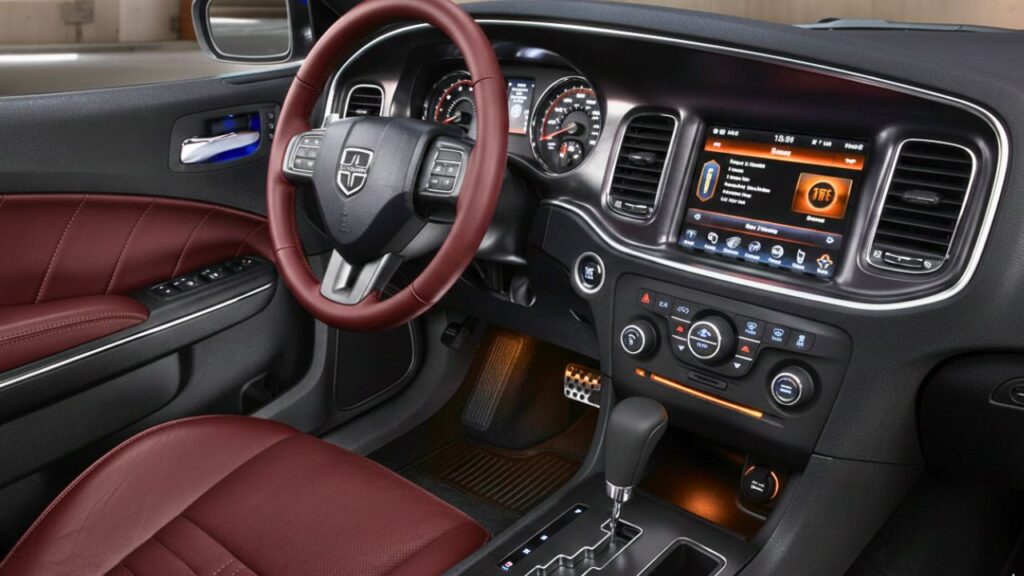
Rear legroom was adequate for adults, and cargo space stood at approximately 14.7 cubic feet. The dashboard layout was intuitive, with controls easy to reach. While interior styling was functional rather than luxurious, the cabin provided a solid level of comfort for daily commuting or long drives.
Technology and Features
Technology offerings evolved over the Avenger’s production run. Standard features included air conditioning, power windows, and a basic audio system. Higher trims added:
- Touchscreen infotainment (later models)
- Uconnect system with Bluetooth connectivity
- Satellite radio and premium audio options
- Dual-zone climate control
- Steering wheel-mounted audio and cruise controls
Optional convenience packages allowed buyers to customize their Avenger for comfort and entertainment needs.
Safety and Driver Assistance
Safety was a priority, with standard features including front, side, and curtain airbags, ABS, and electronic stability control. The Insurance Institute for Highway Safety (IIHS) rated the Avenger “Good” in frontal crash tests, while side-impact ratings were mixed depending on year and trim. Optional features included traction control and tire pressure monitoring. While modern driver assistance systems were not available, the Avenger provided a safe experience for its era.
Ownership Experience

Owners praised the Avenger for its affordability and straightforward maintenance. Common issues included minor suspension wear, interior trim rattles, and occasional electrical glitches in older models. Regular maintenance costs were reasonable, with parts widely available. The V6 Pentastar models were particularly noted for their reliability and smooth performance.
Comparisons with Competitors
Against competitors like the Honda Accord, Toyota Camry, and Nissan Altima, the Dodge Avenger offered distinctive styling and powerful V6 options. While fuel economy and handling lagged slightly behind the competition, the Avenger excelled in offering a more aggressive design and optional performance-oriented trims, appealing to buyers seeking individuality in the midsize segment.
Reasons People Loved or Disliked the Dodge Avenger
Pros:
- Bold, unique exterior styling
- Multiple engine options including a spirited V6
- Affordable purchase and maintenance
- Comfortable seating and reasonable cargo space
Cons:
- Mediocre fuel efficiency in V6 models
- Handling less refined than Japanese competitors
- Interior quality on base models could feel cheap
- Limited advanced technology compared to rivals
Cultural Relevance and Special Editions
While the Dodge Avenger never achieved superstar status, it occasionally appeared in media and movies as a recognizable American sedan. Special edition trims included sportier packages and unique color options. Its legacy remains tied to its distinctive design and value-oriented positioning in the used car market.
Frequently Asked Questions (FAQs)
1. What years was the Dodge Avenger produced?
The modern Dodge Avenger was produced from 2008 to 2014.
2. What engine options were available?
Engines included a 2.4L I4, 2.7L V6, 3.5L V6, and 3.6L V6 Pentastar.
3. How fast is the Dodge Avenger?
Depending on the engine, 0–60 mph times ranged from 6.7 to 9.2 seconds.
4. What is the fuel economy of the Avenger?
Fuel economy ranged from 18–21 mpg city and 27–30 mpg highway.
5. How much does a used Dodge Avenger cost?
Used prices typically range between $4,000 and $12,000 depending on condition and mileage.
6. Is the Dodge Avenger reliable?
V6 Pentastar models are generally reliable; minor issues include suspension wear and trim rattles.
7. How spacious is the interior?
The Avenger seats five comfortably, with 14.7 cubic feet of trunk space.
8. Does it have advanced safety features?
Standard features included airbags, ABS, and stability control; modern driver-assistance features were not available.
9. How does it compare to the Honda Accord or Toyota Camry?
The Avenger stands out for styling and engine options but trails slightly in fuel economy and handling.
10. Are there special editions?
Sporty trims and package options offered unique styling and minor performance enhancements.
Detailed Specifications Table
| Specification | Dodge Avenger 2008–2014 |
|---|---|
| Engine Options | 2.4L I4 / 2.7L V6 / 3.5L V6 / 3.6L V6 |
| Horsepower | 173–283 hp |
| Torque | 166–260 lb-ft |
| Transmission | 4/6-speed automatic, CVT |
| 0–60 mph | 6.7–9.2 sec |
| Top Speed | 115–135 mph |
| Fuel Economy (City/Hwy) | 18–21 / 27–30 mpg |
| Seating Capacity | 5 |
| Cargo Space | 14.7 cu ft |
| Length / Width / Height | 192.3 / 73.9 / 58.9 in |
| Wheelbase | 112.2 in |
| Curb Weight | 3,273–3,585 lbs |
| Safety Ratings (IIHS) | Good (frontal), Marginal-Side Impact |
Final Thought
The Dodge Avenger 2008–2014 remains a distinctive option in the midsize sedan segment, offering bold styling, multiple engine choices, and a comfortable cabin at an affordable price. While it doesn’t match Japanese rivals in fuel efficiency or handling, its reliability, V6 performance, and unique American design make it a compelling choice for used car buyers seeking individuality. For enthusiasts and everyday drivers alike, the Avenger holds a modest yet memorable place in Dodge’s history.