
In the world of hypercars, few names evoke raw excitement like the Aston Martin Valkyrie 2025. Born from a groundbreaking collaboration between Aston Martin and Red Bull Advanced Technologies, this machine blurs the line between road and race engineering. The Valkyrie isn’t just another supercar it’s a full-scale expression of Formula 1 aerodynamics and hybrid innovation brought to public roads.
For 2025, the Valkyrie returns in even more extreme form, including the endurance-focused LM variant that aims to dominate tracks like Le Mans. Designed under the guidance of F1 legend Adrian Newey, the car’s engineering language is driven entirely by performance, precision, and purpose. It represents Aston Martin’s most ambitious leap yet one that redefines what a street-legal car can achieve when motorsport technology meets luxury craftsmanship.
The following sections explore everything from its record-breaking performance figures and intricate design to ownership realities and how it stands against rival hypercars. Whether you’re fascinated by the mechanics of hybrid propulsion or the future of high-speed automotive art, the Valkyrie 2025 promises an experience unlike anything else on four wheels.
Table of Contents
Model Overview & Evolution of Aston Martin Valkyrie 2025
The Aston Martin Valkyrie 2025 is the latest evolution of one of the most ambitious hypercar projects in modern automotive history. Initially conceived as a joint vision between Aston Martin and Red Bull Advanced Technologies, the Valkyrie was designed to bring Formula 1 engineering into a road-legal format. What began as a radical prototype has now matured into a production-ready powerhouse that pushes the limits of performance and aerodynamics.
The Valkyrie’s journey started in 2016 when Aston Martin’s design chief Marek Reichman and F1 aerodynamicist Adrian Newey set out to create a car that could rival the intensity of a racing machine. The first iterations, including the Valkyrie AMR Pro, laid the foundation for what would become the 2025 model a refined yet uncompromising evolution that balances performance with real-world drivability.
By 2025, the Valkyrie project has expanded beyond the original road car. The new Valkyrie LM and Valkyrie LMH variants bridge the gap between production and endurance racing, signaling Aston Martin’s re-entry into the Le Mans Hypercar category. These models maintain the same design philosophy of minimal weight, maximum downforce, and hybridized power delivery but adapt it for the demands of long-distance racing.
Every aspect of the Valkyrie’s development reflects Aston Martin’s vision for its next era one where motorsport innovation directly informs the road car lineup. The 2025 Valkyrie isn’t just a continuation; it’s a declaration that the British marque intends to remain at the forefront of performance engineering in an era defined by electrification and sustainability.
Technical Specifications & Performance of Aston Martin Valkyrie 2025
The Aston Martin Valkyrie 2025 isn’t simply powerful it’s an engineering statement that redefines what a hybrid hypercar can achieve. Developed in collaboration with Cosworth and Red Bull Advanced Technologies, every system within the Valkyrie has been engineered for uncompromising performance. Below, we break down the technical details that make it one of the most advanced road cars ever built.
Powertrain and Hybrid System
At its heart lies a naturally aspirated 6.5-liter V12 engine, developed by Cosworth specifically for the Valkyrie. Revving up to an astonishing 11,100 rpm, this engine alone produces around 1,000 horsepower, delivering a spine-tingling sound reminiscent of Formula 1’s golden era.
Complementing the V12 is a hybrid Kinetic Energy Recovery System (KERS), designed in collaboration with Rimac. This electric unit contributes an additional 160 hp, resulting in a combined system output of roughly 1,160 hp and 681 lb-ft of torque. Together, these components deliver instantaneous power and acceleration with razor-sharp throttle response.
Power is sent to the rear wheels through a seven-speed automated manual transmission developed by Ricardo, tuned specifically for minimal lag and weight efficiency. The hybrid system also assists in torque fill, smoothing shifts and boosting low-speed response perfect for both track and road conditions.
Chassis, Weight, and Aerodynamics
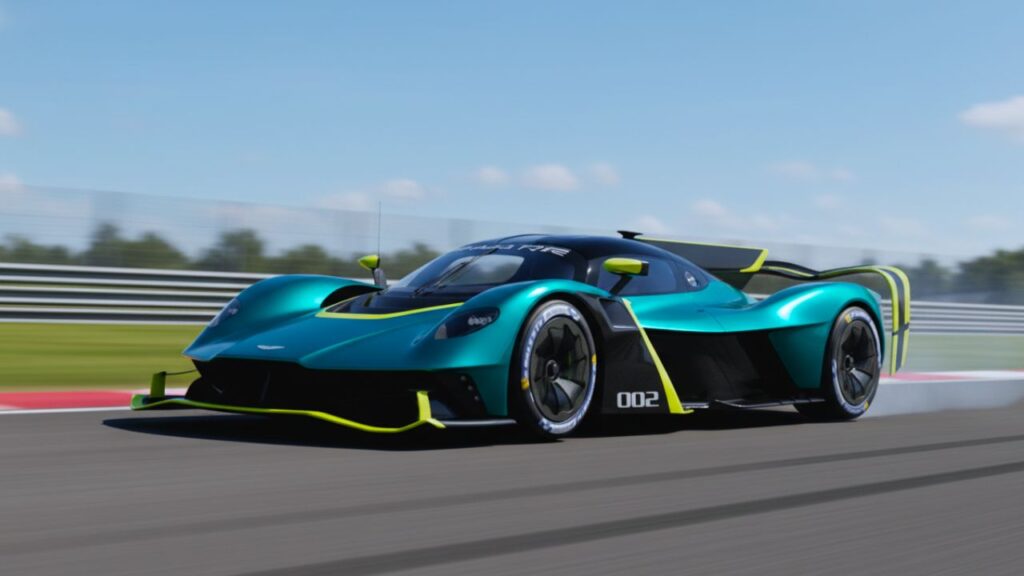
The Aston Martin Valkyrie 2025 is built around a carbon-fiber monocoque chassis, ensuring extreme rigidity and weight savings. Every component is optimized for aerodynamic efficiency, producing over 1,800 kg of downforce at high speeds more than the car’s own weight.
Active aerodynamic elements, including an adjustable rear wing and venturi tunnels beneath the car, manage airflow dynamically depending on driving conditions. The result is unmatched stability even at speeds approaching 400 km/h (249 mph).
Despite its complex systems, the Valkyrie’s dry weight remains around 1,270 kg, thanks to ultra-lightweight materials and an F1-style suspension setup featuring inboard pushrod dampers and adjustable ride height.
Performance Figures and Capability
When it comes to real-world performance, the Valkyrie delivers numbers that place it among the most capable hypercars ever made.
- 0–60 mph: under 2.6 seconds
- Top Speed: approximately 400 km/h (249 mph)
- Braking: carbon-ceramic Brembo system capable of race-grade deceleration
- Handling: active suspension with adaptive damping for seamless track transitions
These statistics aren’t just theoretical. Early test sessions confirm that the Valkyrie 2025 performs on par with purpose-built race cars, blurring the boundaries between road and competition vehicles.
Valkyrie LM and LMH Variant of Aston Martin Valkyrie 2025
The Aston Martin Valkyrie 2025 LM and LMH variants represent the purest expression of the Valkyrie’s motorsport DNA. Designed for endurance racing, these models bring Aston Martin back into the legendary Le Mans Hypercar category with a purpose-built version that prioritizes track dominance over road comfort. Built from the same foundations as the road-going Valkyrie, the LM variant adapts its components for extreme competition, refining every system for reliability and performance over long distances.
Racing Design and Engineering Purpose
The Valkyrie LM is not a mere modification; it’s a reengineered hypercar tailored for endurance racing. Its naturally aspirated Cosworth V12 remains at the core but is tuned for sustained power delivery, producing around 697 horsepower to comply with FIA Le Mans regulations. Unlike the hybrid-assisted road car, the LM focuses on mechanical precision, improved cooling, and long-distance reliability rather than peak output. The chassis is optimized for track aerodynamics, featuring widened wheel arches, extended splitters, and a massive rear diffuser that increases cornering grip and stability during 24-hour racing conditions.
Technical Adjustments and Aerodynamics
To meet endurance standards, the Aston Martin Valkyrie LM 2025 uses a simplified hybrid setup and modified bodywork. The aerodynamic package generates immense downforce while reducing drag for long straights, making it both stable and efficient at Le Mans speeds. Engineers have rebalanced the suspension geometry, upgraded braking systems, and integrated FIA-spec safety equipment including roll cages and endurance fuel systems. The car’s weight distribution and center of gravity are tuned precisely to maintain consistency over multiple race stints.
Production Volume and Exclusivity
Aston Martin plans to produce a very limited number of LM units reports suggest no more than 10 examples worldwide. Each will be hand-built at the brand’s Gaydon headquarters and reserved for collectors and private racing teams. Buyers will have access to Aston Martin’s motorsport engineering support, offering race setup assistance and telemetry integration. Given its exclusivity and technical pedigree, the Valkyrie LM stands as a collector’s crown jewel and a competitive race machine.
Performance and Track Focus
While the Valkyrie LM sacrifices some of the hybrid system’s power boost, it gains unparalleled balance and endurance. Its lighter structure, aggressive aerodynamics, and dedicated race calibration allow lap times close to professional endurance prototypes. With cornering G-forces exceeding 3.0 G and braking that matches FIA race cars, the Valkyrie LM is engineered to sustain peak performance hour after hour, making it one of the most complete racing hypercars ever created.
The LM and LMH variants of the Aston Martin Valkyrie 2025 prove that the brand’s ambitions extend far beyond luxury and design. These machines embody the spirit of competition, innovation, and craftsmanship a perfect fusion of endurance racing heritage and modern performance art.
Design, Craftsmanship and Innovation of Aston Martin Valkyrie 2025

The Aston Martin Valkyrie 2025 is a masterpiece of engineering precision and artistic design, merging the aesthetics of a race car with the elegance expected from Aston Martin. Every curve, vent, and contour serves a functional purpose, yet it never loses the sense of sculptural beauty that defines the brand’s design philosophy. From its razor-sharp exterior lines to its minimalistic cockpit, the Valkyrie 2025 represents the perfect fusion of form and performance.
Exterior Design and Aerodynamic Philosophy
The Valkyrie’s exterior is defined by aerodynamic purity. Its teardrop-shaped cabin and underfloor venturi tunnels are designed to maximize downforce while minimizing drag. Every surface guides airflow to critical components, including the massive rear diffuser and active rear wing. The car’s bodywork is constructed entirely from carbon fiber, leaving no paint on many panels to save weight and showcase its raw texture. LED lighting, sculpted intakes, and side mirrors replaced by rearview cameras further enhance aerodynamic efficiency and futuristic appeal.
Interior Layout and Driver Experience
Inside the Aston Martin Valkyrie 2025, the focus shifts from comfort to control. The cabin is tight and driver-centered, resembling a Formula 1 cockpit more than a road car interior. A rectangular steering wheel with integrated OLED display replaces traditional gauges, providing live telemetry and performance data. Both seats are fixed carbon shells with six-point harnesses, positioned at an aggressive recline to reduce drag and lower the driver’s center of gravity. Despite its minimalist nature, the cabin still features hand-stitched Alcantara, carbon accents, and precision detailing that reflects Aston Martin’s luxury DNA.
Innovation and Technology Integration
The Valkyrie 2025 integrates technologies directly derived from racing. Its hybrid system uses advanced battery management developed with Rimac, while the electronic control systems continuously monitor torque distribution and aerodynamic adjustments. The vehicle also features active suspension that automatically adapts to track or road conditions, ensuring maximum grip and ride comfort. Lightweight 3D-printed titanium components are used in the suspension mounts and gearshift paddles, demonstrating Aston Martin’s embrace of next-generation manufacturing techniques.
Craftsmanship and Customization
Each Aston Martin Valkyrie 2025 is built by hand, with owners invited to participate in bespoke customization sessions at Aston Martin’s headquarters. Clients can choose unique liveries, interior materials, and even aerodynamic configurations to match their performance preferences. The craftsmanship process takes several months, involving meticulous carbon layups and precision assembly by a dedicated team of engineers. This level of personalization ensures that no two Valkyries are exactly alike, cementing the model’s identity as a functional piece of automotive art.
The design and innovation behind the Aston Martin Valkyrie 2025 transcend traditional car-building it’s a rolling exhibition of technology and artistry, made for those who value both speed and sophistication.
Pros and Cons of Aston Martin Valkyrie 2025
The Aston Martin Valkyrie 2025 stands as one of the most advanced and exclusive hypercars ever created, but like any engineering marvel, it carries both strengths and compromises. Below is a balanced overview of what makes the Valkyrie exceptional and where its limitations emerge.
Pros
Unrivaled Performance: With a naturally aspirated V12 engine paired with a hybrid KERS system delivering over 1,100 horsepower, the Valkyrie 2025 offers breathtaking acceleration and track-level speed unmatched by most hypercars.
Racing-Derived Engineering: Direct input from Formula 1 experts at Red Bull Advanced Technologies and aerodynamic genius Adrian Newey ensures that every component is optimized for performance and efficiency.
Exclusive Craftsmanship: Each Valkyrie is hand-built, offering owners full customization options and the kind of bespoke treatment usually reserved for one-off race prototypes.
Technological Benchmark: Advanced hybrid integration, active aerodynamics, and adaptive suspension make it a technological showpiece that influences the next generation of high-performance vehicles.
Cons
Limited Usability: Despite being technically road-legal, the Valkyrie’s ultra-low ride height and loud powertrain make it impractical for everyday driving.
High Maintenance Costs: The combination of a Cosworth V12, hybrid components, and bespoke construction demands costly servicing and specialized support.
Extremely Limited Production: With only a few units available worldwide, accessibility is nearly impossible for most enthusiasts, limiting its reach to collectors.
Unverified Real-World Data: Some performance metrics, such as top speed and endurance efficiency, remain based on factory simulations rather than independent testing.
Overall, the Aston Martin Valkyrie 2025 delivers unmatched thrills and exclusivity but asks for sacrifices in comfort, accessibility, and ownership practicality traits that make it a dream for collectors and a challenge for daily users.
Competitor and Market Comparisons of Aston Martin Valkyrie 2025
The Aston Martin Valkyrie 2025 competes in an elite league where engineering ambition outweighs commercial practicality. Its rivals include hybrid and all-electric hypercars from brands pushing the limits of technology, performance, and exclusivity. Comparing it to these competitors reveals where the Valkyrie stands in terms of innovation, pricing, and overall value.
Comparison with Mercedes-AMG One
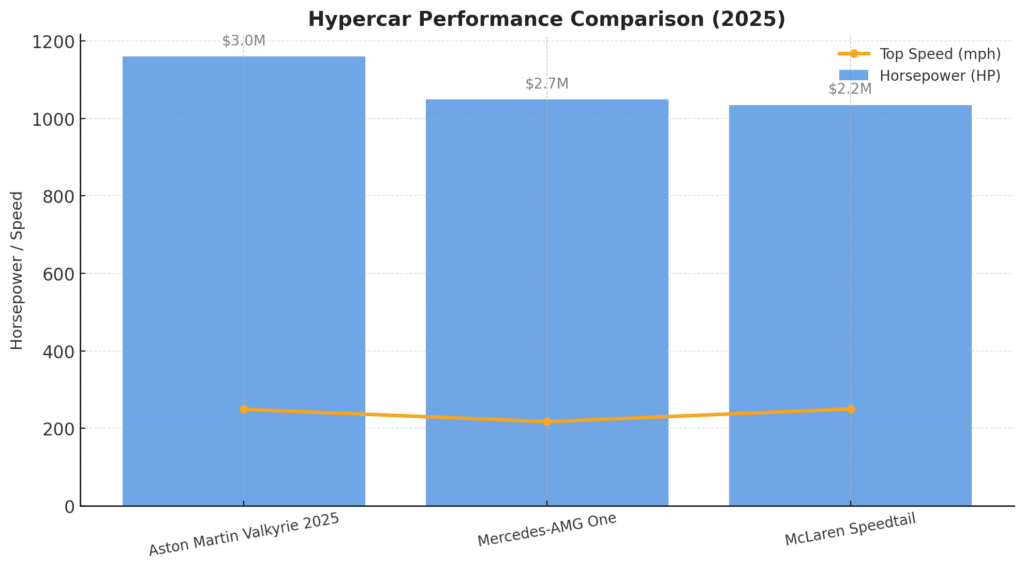
The Mercedes-AMG One is the Valkyrie’s closest rival, sharing a similar philosophy of bringing Formula 1 technology to the road. Powered by a 1.6-liter turbocharged V6 hybrid producing over 1,049 horsepower, it features an even more complex hybrid system derived directly from the Mercedes F1 power unit. However, while the AMG One emphasizes hybrid sophistication and emissions compliance, the Valkyrie 2025 focuses on naturally aspirated purity and aerodynamics. The result is a car that feels more raw and visceral, delivering a track experience closer to racing prototypes than to production vehicles.
Comparison with McLaren Speedtail
McLaren’s Speedtail approaches performance differently, prioritizing top speed and aerodynamic efficiency over track aggression. Producing around 1,035 horsepower, it achieves a top speed of 250 mph, slightly above the Valkyrie’s estimated 249 mph. Yet, the Speedtail lacks the same level of downforce and cornering capability that defines the Valkyrie 2025. Where the Speedtail aims for elegance and long-distance comfort, the Valkyrie remains a focused, uncompromising performance weapon.
Market Position and Perception
With prices rumored to exceed $3 million, the Valkyrie 2025 occupies the top tier of the hypercar hierarchy. Its exclusivity rivals limited-production icons such as the Porsche 918 Spyder, Ferrari SF90 XX, and Koenigsegg Jesko Absolut. However, the Valkyrie’s connection to endurance racing and F1-level aerodynamics gives it a unique edge it’s not only a collector’s piece but also a rolling demonstration of Aston Martin’s engineering capabilities.
In a market dominated by electrification and luxury performance, the Aston Martin Valkyrie 2025 remains an outlier a machine built for purity, not convenience. While competitors chase hybrid balance or full-electric acceleration, the Valkyrie stands as the last of the analog-meets-hybrid hypercars, crafted for those who want the ultimate connection between human, machine, and motion.
Pricing, Availability, and Ownership of Aston Martin Valkyrie 2025
The Aston Martin Valkyrie 2025 is among the world’s most exclusive hypercars, with a price reflecting its engineering complexity and rarity.
Pricing and Variants
- Estimated price: around $3 million USD, depending on configuration and market.
- Limited to 150 road cars and 25 track-only AMR Pro units.
- Customization through Aston Martin’s Q division adds significant cost.
Availability and Deliveries
- Deliveries expected to continue through 2025, with production fully allocated.
- Key markets: UK, Middle East, and North America.
- Buyers undergo a bespoke fitting process, ensuring each Valkyrie is unique.
Ownership Experience
Owning the Valkyrie involves more than possession it’s a membership in Aston Martin’s elite performance legacy. Owners receive track access, factory visits, and dedicated service support for their ultra-rare machines.
Conclusion: The Legacy of Aston Martin Valkyrie 2025
The Aston Martin Valkyrie 2025 stands as a milestone in modern automotive engineering, bridging Formula 1 innovation with road-going artistry. Every component from its Cosworth-built V12 to its race-derived aerodynamics reflects a commitment to creating the purest possible driving experience. It’s not just a hypercar, but a statement of intent from Aston Martin: to challenge technological boundaries while preserving emotional performance.
In a time when electric power dominates, the Valkyrie 2025 celebrates mechanical excellence, proving that combustion and hybrid systems can still inspire awe. Its exclusivity, price, and raw personality ensure it will remain a collector’s icon and a benchmark for decades.
For enthusiasts seeking a glimpse into the next generation of extreme performance, the Aston Martin Valkyrie 2025 is more than a car it’s a glimpse into the soul of speed itself.