
What Defines the 2026 Porsche 911
Few cars in automotive history carry the weight, respect, and emotional pull of the Porsche 911. For over six decades, it has balanced tradition with innovation better than almost any performance car. The 2026 Porsche 911 continues this legacy as part of the 992.2 generation, representing one of the most meaningful evolutions the model has seen in years.
Rather than reinventing the formula, Porsche has refined it. The 2026 model focuses on subtle design updates, advanced digitalization, and a groundbreaking performance-oriented hybrid system, ensuring the 911 remains relevant in a rapidly changing automotive landscape. This model year is particularly significant because it shows how Porsche plans to preserve driving purity while adapting to stricter emissions standards and modern expectations.
Porsche 911 2026 Overview and Key Updates
The 2026 Porsche 911 sits firmly within the mid-cycle refresh of the 992 generation, often referred to as 992.2. Unlike a full redesign, this update improves critical areas without disturbing the core character that defines the 911.
Key highlights of the 2026 update include:
• Introduction of Porsche’s T-Hybrid system on select trims
• A fully digital instrument cluster for the first time in a 911
• Updated exterior styling with improved aerodynamics
• Enhanced infotainment and connectivity features
What makes the 2026 model stand out is Porsche’s careful approach. Electrification is introduced not to chase efficiency headlines, but to enhance performance, keeping the 911’s soul intact.
Exterior Design Evolution
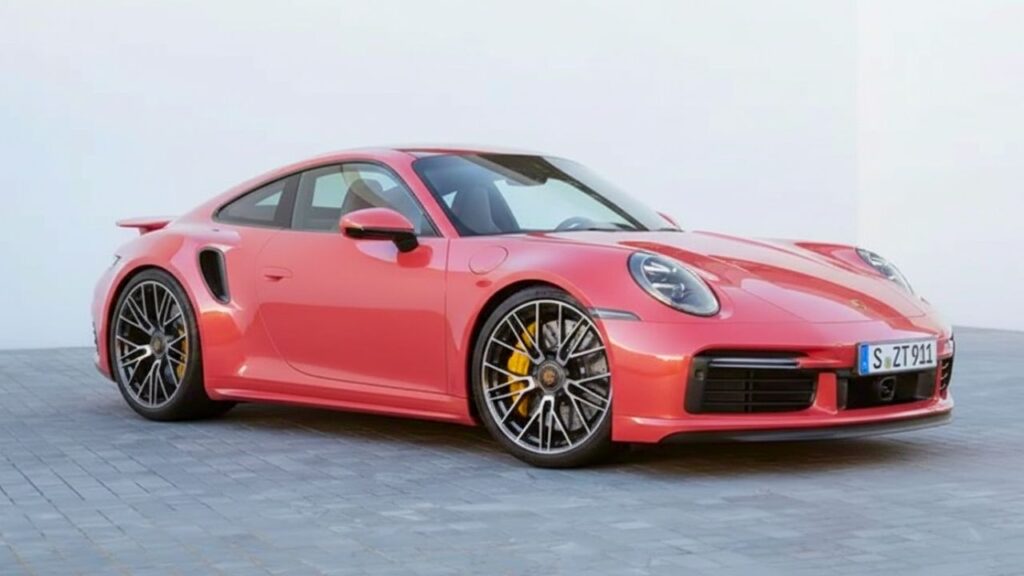
Subtle Styling Changes in the 992.2 Refresh
At first glance, the 2026 Porsche 911 looks unmistakably familiar. That is intentional. Porsche understands that the 911’s silhouette is sacred. However, closer inspection reveals a number of refinements.
The front fascia features revised bumper intakes, designed to improve cooling efficiency while sharpening the car’s stance. The headlights now integrate advanced LED matrix technology, offering better illumination and a more modern signature.
At the rear, minor adjustments to the bumper and light graphics create a cleaner, wider appearance. These changes aren’t dramatic, but they enhance both aesthetics and aerodynamic performance.
Wheels, Paint Options, and Visual Customization
Customization remains a core strength of the 911 lineup. The 2026 model introduces new wheel designs, ranging from classic multi-spoke styles to aggressive performance-oriented options.
Porsche’s Paint To Sample (PTS) program continues to be a major draw, allowing buyers to choose from a vast palette of exclusive colors. SportDesign packages and aerodynamic kits further enable owners to tailor the car’s look, from understated elegance to track-ready aggression.
Interior, Technology, and Digital Experience
Cabin Design and Material Upgrades
Inside, the 2026 Porsche 911 marks a noticeable shift toward digital sophistication. The cabin still feels unmistakably Porsche, but the layout has been modernized.
Material quality remains exceptional, with premium leather, brushed aluminum, and optional carbon fiber trim. Ergonomics continue to prioritize the driver, maintaining the low seating position and clear sightlines that define the 911 experience.
Infotainment and Driver Displays
For the first time in its history, the 911 adopts a fully digital instrument cluster. The iconic analog tachometer has been replaced with a configurable digital display that offers navigation, performance data, and driving modes without clutter.
The updated Porsche Communication Management (PCM) system features a faster interface, improved voice control, wireless smartphone integration, and over-the-air update capability. These upgrades ensure the 911 feels as advanced as its rivals while maintaining simplicity.
Comfort and Practicality Enhancements
While still a sports car at heart, the 2026 911 offers meaningful daily usability. Improved seat designs enhance long-distance comfort, while revised storage solutions make the car more practical for everyday driving. It remains one of the few high-performance sports cars that can realistically be used year-round.
Powertrain Lineup and Hybrid Innovation
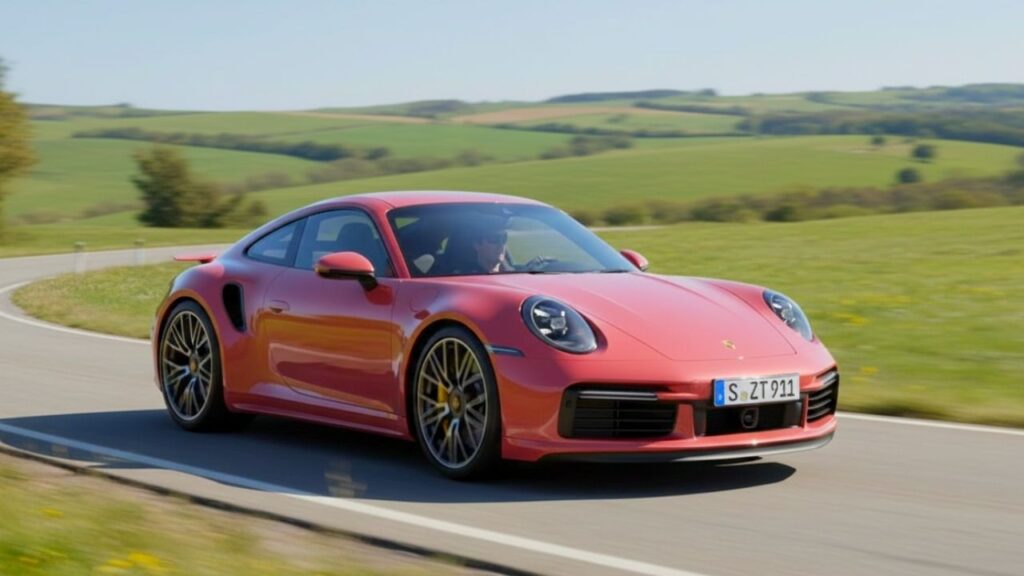
Carrera and Carrera S Powertrains
The backbone of the lineup remains the twin-turbocharged flat-six engine. In the Carrera and Carrera S trims, Porsche continues to refine combustion efficiency, throttle response, and sound character.
Power output increases are modest but meaningful, ensuring stronger acceleration while maintaining reliability. The 8-speed PDK transmission remains the primary choice, offering lightning-fast shifts and excellent responsiveness. Manual availability is expected to remain limited to select trims.
911 GTS T-Hybrid System Explained
The most important innovation for 2026 is the T-Hybrid system, debuting on the 911 GTS. Unlike traditional hybrids focused on fuel savings, Porsche’s approach is performance-first.
This system integrates:
• An electrically assisted turbocharger to eliminate lag
• A compact electric motor supporting acceleration
• A lightweight battery optimized for short bursts of power
The result is immediate throttle response, improved low-end torque, and stronger overall performance without significantly increasing weight. It represents a bridge between pure internal combustion and future electrification.
Future Performance Variants (Expectation Section)
High-performance variants such as the Turbo, Turbo S, and GT models are widely expected to follow later in the lifecycle. However, as of now, these trims remain unconfirmed for the 2026 model year. Any discussion of their specifications should be viewed as expectation rather than fact.
Performance, Handling, and Driving Dynamics
Driving dynamics have always defined the 911, and the 2026 model sharpens this reputation further. The rear-engine layout continues to deliver exceptional traction, while chassis tuning improves balance and predictability.
Updated Porsche Active Suspension Management allows the car to adapt seamlessly between comfort and performance settings. Rear-axle steering enhances agility at low speeds and stability at high speeds, while available all-wheel drive improves confidence in all conditions.
Braking performance is equally impressive, with optional carbon-ceramic brakes offering fade-free stopping power for aggressive driving.
Fuel Economy, Emissions, and Efficiency Strategy
The introduction of hybrid technology is partly driven by global emissions regulations, but Porsche has managed to improve efficiency without sacrificing excitement. The T-Hybrid system enables better fuel economy during everyday driving while delivering stronger performance when pushed.
Rather than chasing maximum electric range, Porsche prioritizes real-world efficiency gains, ensuring the 911 remains compliant without feeling compromised.
Safety and Driver Assistance Technologies
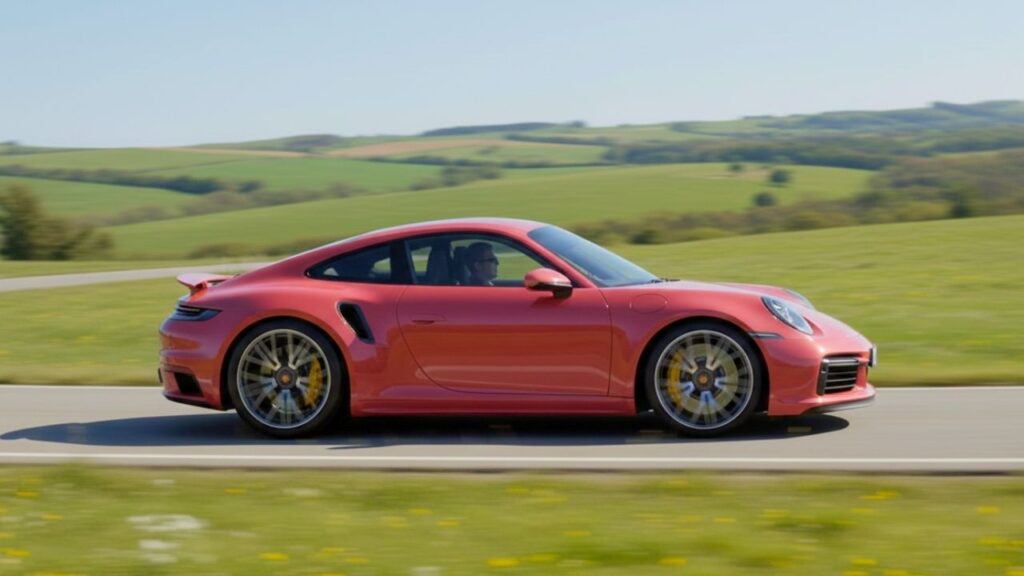
Safety features in the 2026 Porsche 911 are comprehensive yet discreet. Standard systems include autonomous emergency braking, lane keeping assistance, and adaptive cruise control.
Porsche’s philosophy is to support the driver, not replace them, which means intervention is subtle and adjustable. This balance ensures safety without diminishing engagement.
Porsche 911 2026 vs Key Rivals
In the modern performance landscape, the 911 competes against a growing list of rivals, including front-engine grand tourers and mid-engine sports cars. Compared to alternatives like the AMG GT, Ferrari Roma, and Aston Martin Vantage, the 911 continues to stand out for its versatility and precision.
A closer look at competitors, such as in this Mercedes-AMG GT 43 performance comparison, highlights how the 911 balances daily usability with track-level capability better than most rivals.
Ownership Experience and Cost of Ownership
Owning a Porsche 911 is not just about performance. Porsche’s reputation for build quality, dealer support, and strong resale value makes long-term ownership appealing.
Maintenance costs are higher than average, but reliability is strong for a high-performance vehicle. The 911 also benefits from one of the best depreciation curves in the segment, particularly for well-optioned models.
Global Availability and Market Positioning
The 2026 Porsche 911 is expected to be offered globally, with minor variations in trims and specifications depending on market regulations. Both left-hand and right-hand drive configurations will continue to be available, ensuring broad international appeal.
FAQs: Porsche 911 2026
Is the 2026 Porsche 911 hybrid?
Yes, select trims like the GTS feature Porsche’s performance-focused T-Hybrid system.
What is the 911 T-Hybrid system?
It is a lightweight hybrid designed to enhance acceleration and throttle response rather than maximize electric driving.
Will there be a manual transmission in 2026?
Manual availability is expected to continue on limited trims, though most models prioritize the PDK gearbox.
Is the 2026 Porsche 911 fully electric?
No, it remains combustion-based with partial electrification.
How fast is the Porsche 911 2026 expected to be?
Performance varies by trim, with the GTS likely achieving 0–100 km/h in around three seconds.
Specifications
Technical Specifications
| Item | Details |
|---|---|
| Platform | Porsche 992.2 |
| Engine Layout | Rear-engine flat-six |
| Transmission | 8-speed PDK, limited manual |
| Drivetrain | RWD / AWD |
Powertrain and Performance
| Variant | Power Output | 0–100 km/h | Top Speed |
|---|---|---|---|
| Carrera | ~385 hp | ~4.0 sec | ~293 km/h |
| Carrera S | ~440 hp | ~3.5 sec | ~308 km/h |
| GTS T-Hybrid | ~530+ hp | ~3.0 sec | ~312 km/h |
Fuel Economy
| Variant | Fuel Type | Focus |
|---|---|---|
| Carrera | Petrol | Optimized ICE |
| GTS | Petrol + Hybrid | Performance hybrid |
Dimensions and Weight
| Measurement | Approximate |
|---|---|
| Length | ~4,530 mm |
| Width | ~1,850 mm |
| Height | ~1,300 mm |
| Weight | 1,520–1,650 kg |
Pricing and Trims
| Trim | Expected Starting Price |
|---|---|
| Carrera | USD $120,000+ |
| Carrera S | USD $135,000+ |
| GTS T-Hybrid | USD $165,000+ |
Conclusion: Is the Porsche 911 2026 Worth Waiting For
The 2026 Porsche 911 proves that evolution, not revolution, is the key to longevity. By introducing performance-focused hybrid technology, refining digital features, and preserving its iconic design, Porsche ensures the 911 remains the benchmark sports car.
For enthusiasts seeking cutting-edge performance without losing emotional connection, the 2026 911 is not just worth waiting for, it may represent one of the most complete versions yet.
Pingback: 2026 Aston Martin DB12: Performance, Design, Specs, and Pricing -