
What Is the 2026 Toyota Yaris Sedan?
The 2026 Toyota Yaris Sedan is expected to continue Toyota’s long-standing approach to affordable, efficient, and reliable small sedans. Positioned below the Corolla in many markets, the Yaris Sedan has traditionally appealed to urban commuters, first-time buyers, and fleet customers who prioritize low ownership costs over outright performance.
It is important to clarify naming before going further. In several regions, especially Southeast Asia, the Middle East, and parts of Latin America, the Yaris Sedan is sold under the Toyota Vios name. While Toyota has not officially confirmed a globally unified “2026 Toyota Yaris Sedan” at the time of writing, the model is widely expected to continue in markets where compact sedans remain in strong demand.
This article explores what buyers can realistically expect from the 2026 Toyota Yaris Sedan based on Toyota’s current product strategy, previous Yaris/Vios generations, and evolving segment trends.
Market Positioning and Target Audience
The Yaris Sedan sits at the entry point of Toyota’s sedan lineup. Its role is not to impress with luxury or performance figures but to deliver dependable transportation at a competitive price.
The 2026 Yaris Sedan is expected to target:
- Urban drivers seeking easy maneuverability and fuel efficiency
- Young professionals purchasing their first new car
- Small families needing a practical yet affordable sedan
- Ride-hailing and fleet operators focused on durability and resale value
In global markets where compact SUVs dominate headlines, the Yaris Sedan remains relevant due to its lower purchase price, better fuel economy, and simpler mechanical layout. Toyota’s brand reputation continues to give it an edge in this price-sensitive segment.
Exterior Design: Expected Styling Direction for 2026
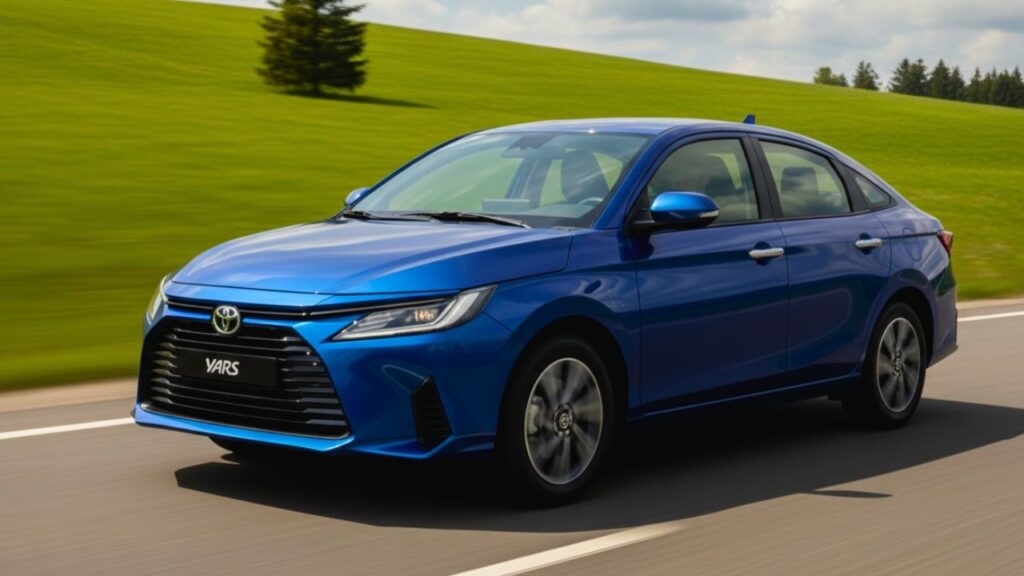
Overall Design Philosophy
Toyota’s recent design language favors sharper lines and more aggressive proportions, even on smaller vehicles. The 2026 Yaris Sedan is expected to follow this trend while maintaining a conservative appeal suitable for global markets.
Rather than a full redesign, the 2026 model year will likely introduce subtle refinements focused on aerodynamics and visual freshness.
Front and Rear Styling Updates
The front fascia is expected to feature a slimmer grille design paired with more angular headlamps. LED headlights are likely to be standard on higher trims and optional on entry-level variants, depending on region.
At the rear, mild updates to the taillight graphics and bumper design are expected, enhancing the car’s visual width without adding unnecessary complexity.
Wheel Options and Color Choices
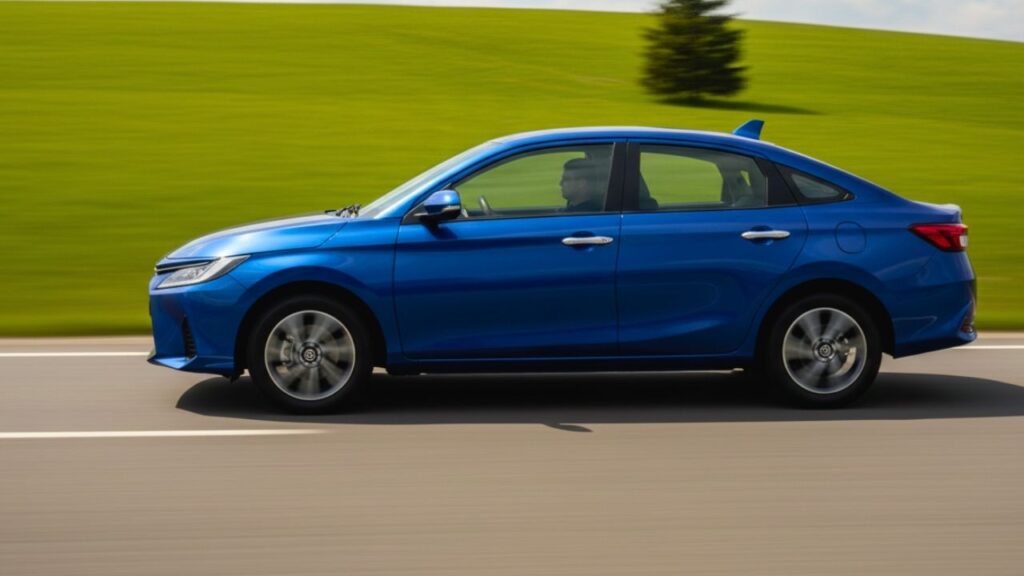
Wheel sizes are expected to range from 15-inch steel wheels on base trims to 16-inch or 17-inch alloy wheels on higher specifications. Toyota may also introduce new exterior colors, including modern metallic and pearl finishes, to keep the model competitive against newer rivals.
Interior Design and Cabin Experience
Cabin Layout and Material Quality
Inside, the 2026 Toyota Yaris Sedan is expected to emphasize simplicity and functionality. The dashboard layout will likely remain straightforward, with clearly labeled controls and a driver-focused layout.
Material quality is expected to improve slightly over previous versions, especially in touchpoints such as steering wheel trim, door panels, and center console finishes.
Seating Comfort and Space
Front seats are expected to offer good comfort for daily commuting, with manual adjustments standard and height adjustment available on higher trims. Rear seat space will remain adequate for two adults, though taller passengers may find legroom limited on longer journeys.
Cargo Capacity and Practicality
One of the Yaris Sedan’s key advantages over the hatchback is its trunk space. The 2026 model is expected to offer a generously sized trunk suitable for groceries, luggage, or business use. Fold-down rear seats may be available on select trims to increase flexibility.
Infotainment and Connectivity Technology
Infotainment System Expectations
Toyota has been steadily updating its infotainment systems, and the 2026 Yaris Sedan is expected to benefit from this progress. A centrally mounted touchscreen, likely between 8 and 9 inches on higher trims, should serve as the main interface.
Lower trims may continue to use smaller displays or simplified systems to keep costs down.
Smartphone Integration and Connectivity
Apple CarPlay and Android Auto are expected to be available, with wireless connectivity offered in select markets. USB ports, Bluetooth connectivity, and steering-mounted controls will likely be standard across most trims.
Digital Driver Displays
While fully digital instrument clusters are becoming common, the Yaris Sedan is expected to retain a combination of analog gauges with a digital multi-information display in the center, balancing cost and functionality.
Safety and Driver Assistance Technologies
Standard Safety Features
Toyota’s focus on safety is a major selling point. The 2026 Yaris Sedan is expected to include core safety features such as:
- Multiple airbags
- Anti-lock braking system
- Electronic stability control
- Traction control
These features are likely to be standard across all markets.
Advanced Driver Assistance Systems
Toyota Safety Sense may be offered on higher trims or in select regions. This could include pre-collision warning, lane departure alert, and adaptive cruise control, depending on regulatory requirements and pricing strategy.
Safety Ratings Outlook
Based on previous Yaris and Vios generations, the 2026 Yaris Sedan is expected to perform competitively in regional safety assessments such as ASEAN NCAP, especially when equipped with advanced safety packages.
Powertrain Options and Performance Expectations
Petrol Engine Lineup
The 2026 Toyota Yaris Sedan is expected to continue with efficient naturally aspirated petrol engines. Common options may include:
- A 1.3-liter engine focused on maximum fuel efficiency
- A 1.5-liter engine offering slightly better performance for highway driving
Power output is expected to remain modest, prioritizing reliability and low emissions over speed.
Hybrid Possibility
A hybrid Yaris Sedan remains uncertain. While Toyota has expanded hybrid offerings globally, cost constraints may limit availability to select markets. If introduced, a hybrid variant would significantly improve fuel efficiency and emissions performance.
Transmission Options
Manual transmissions are expected to remain available in entry-level trims, particularly in emerging markets. CVT or traditional automatic gearboxes will likely dominate higher trims for improved driving comfort.
Ride Quality, Handling, and Urban Driving
The Yaris Sedan has traditionally been tuned for comfort rather than sportiness. The 2026 model is expected to maintain this focus, with suspension calibrated to absorb urban road imperfections.
Steering is likely to remain light and predictable, making the car easy to maneuver in tight city environments. Highway stability is expected to be adequate for daily use, though it will not match larger sedans in refinement.
Fuel Economy and Ownership Costs
Fuel efficiency is one of the Yaris Sedan’s strongest selling points. The 2026 model is expected to deliver excellent real-world mileage, especially with the smaller engine options.
Ownership costs are also expected to remain low due to:
- Proven Toyota reliability
- Affordable spare parts
- Wide service network in most markets
These factors contribute to strong resale value, making the Yaris Sedan a financially sensible long-term choice.
Global Trims and Feature Variations
Toyota typically tailors trims based on regional preferences. In some markets, base models focus on affordability with minimal features, while higher trims may include premium touches such as alloy wheels, leather accents, and advanced safety systems.
Fleet-oriented trims may emphasize durability and ease of maintenance, while consumer-focused variants offer more comfort and technology.
Pricing Expectations and Market Comparison
Pricing for the 2026 Toyota Yaris Sedan is expected to remain competitive within the subcompact sedan segment. Global pricing will vary based on taxes, import duties, and feature levels.
For buyers comparing Toyota’s sedan lineup, it is worth contrasting the Yaris Sedan with larger and more premium offerings such as the Toyota Crown 2025 luxury sedan overview, which highlights how Toyota scales comfort, performance, and technology across different price brackets.
Overall, the Yaris Sedan’s value proposition lies in its balance of affordability, efficiency, and reliability rather than feature dominance.
Key Competitors in the Subcompact Sedan Segment
The 2026 Yaris Sedan is expected to compete with:
- Honda City, known for its spacious interior
- Hyundai Accent, offering modern styling and technology
- Nissan Almera, focusing on comfort and fuel efficiency
Toyota’s advantage remains its long-term durability and strong brand trust in many regions.
Ownership Experience and Warranty Coverage
Warranty coverage will vary by market, but Toyota typically offers competitive factory warranties with optional extended coverage. Service intervals are expected to remain straightforward, and maintenance costs should stay below segment averages.
For fleet buyers and private owners alike, the Yaris Sedan’s reputation for trouble-free ownership continues to be a major selling point.
Frequently Asked Questions (FAQ)
Is the 2026 Toyota Yaris Sedan officially confirmed?
Toyota has not yet released official global details. The model is expected in regions where the Yaris Sedan or Toyota Vios remains popular.
Is the Toyota Yaris Sedan the same as the Toyota Vios?
In many markets, yes. The Toyota Vios is essentially the Yaris Sedan under a different name.
Will the 2026 Yaris Sedan offer a hybrid engine?
A hybrid option is possible but not confirmed and may be limited to select markets.
What markets are likely to get the Yaris Sedan in 2026?
Southeast Asia, the Middle East, and Latin America are the most likely regions.
How fuel-efficient is the expected 2026 Yaris Sedan?
Fuel economy is expected to remain among the best in its segment, especially with smaller petrol engines.
Will Toyota discontinue the Yaris Sedan globally?
There is no indication of a complete global discontinuation, though availability varies by region.
Specifications
Technical Specifications (Expected)
| Specification | Details |
|---|---|
| Platform | TNGA-B (expected) |
| Body Type | Subcompact sedan |
| Drivetrain | Front-wheel drive |
Powertrain and Performance
| Engine Option | Output (Estimated) | Transmission |
|---|---|---|
| 1.3L Petrol | 95–100 hp | 5MT / CVT |
| 1.5L Petrol | 105–110 hp | CVT / AT |
| Hybrid (select markets) | ~115 hp combined | e-CVT |
Fuel Economy (Estimated)
| Powertrain | Combined Efficiency |
|---|---|
| 1.3L Petrol | 18–20 km/l |
| 1.5L Petrol | 17–19 km/l |
| Hybrid | 25+ km/l |
Dimensions and Weight (Approximate)
| Measurement | Value |
|---|---|
| Length | ~4,425 mm |
| Width | ~1,740 mm |
| Height | ~1,480 mm |
| Wheelbase | ~2,620 mm |
| Curb Weight | 1,050–1,150 kg |
Pricing and Trims (Global Overview)
| Region | Estimated Price Range |
|---|---|
| Southeast Asia | USD 14,000 – 18,000 |
| Middle East | USD 15,000 – 19,000 |
| Latin America | USD 14,500 – 18,500 |
Conclusion: Should You Wait for the 2026 Toyota Yaris Sedan?
The 2026 Toyota Yaris Sedan is expected to remain a sensible choice for buyers who value efficiency, reliability, and affordability above all else. While it may not offer cutting-edge performance or luxury, it delivers where it matters most for daily transportation.
For urban drivers, fleet operators, and budget-conscious buyers in markets where the model is available, the Yaris Sedan continues to represent Toyota’s commitment to practical mobility.
Pingback: 2026 Toyota Aygo X Hybrid: Specs, Features, Price & Review -
With havin so much written content do you ever run into any problems of plagorism or copyright violation? My website has a lot of exclusive content I’ve either created myself or outsourced but it seems a lot of it is popping it up all over the web without my permission. Do you know any ways to help protect against content from being ripped off? I’d really appreciate it.