
The Nissan Navara has long been one of the toughest and most dependable pickup trucks in global markets. For 2026, Nissan is ready to reveal the fourth-generation Navara, marking one of the most significant overhauls in the model’s history. Expected to debut in late 2025 and hit showrooms in early 2026, this new Navara blends rugged durability with modern refinement, advanced driver tech, and alliance-based engineering shared with the latest Mitsubishi Triton.
Whether you’re a tradesperson, fleet manager, or off-road enthusiast, the 2026 Navara promises stronger performance, enhanced comfort, and cutting-edge safety systems all while preserving the practical utility the nameplate is known for.
Table of Contents
Design and Styling Overview
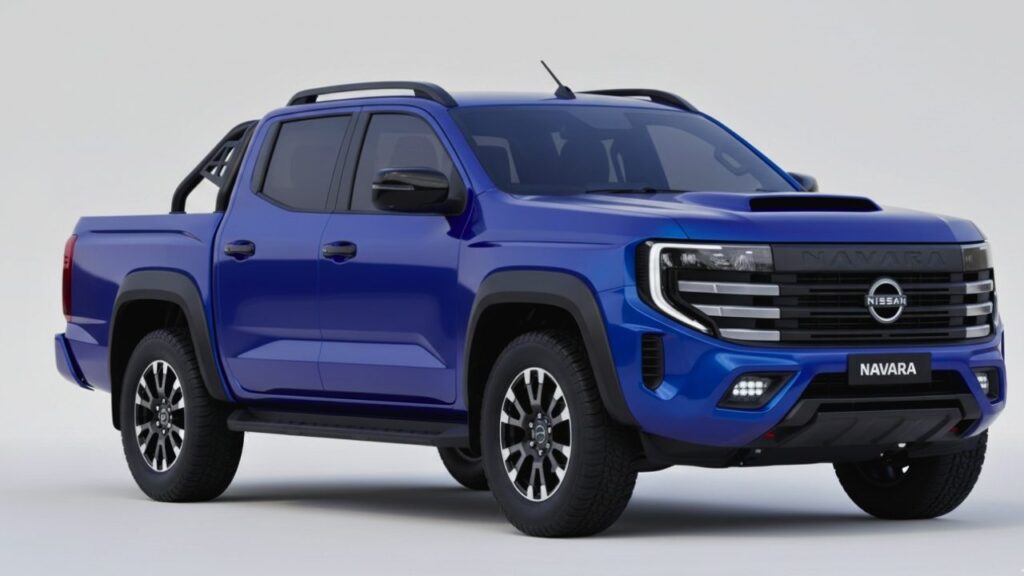
The 2026 Nissan Navara ushers in a bold new era for Nissan’s global pickup line. Early prototypes and design leaks hint at a stronger, more muscular aesthetic, borrowing cues from the recently updated Frontier in North America.
The front fascia features a broader V-motion grille framed by C-shaped LED headlights and a sculpted bumper design with integrated recovery hooks. The hood appears taller, reflecting Nissan’s shift toward a more aggressive, off-road-ready stance. The rear end is expected to carry signature LED tail lamps, a damped tailgate, and new alloy wheel designs ranging from 17 to 20 inches depending on trim.
Chassis improvements include a reinforced ladder frame structure co-developed within the Nissan-Mitsubishi Alliance, ensuring better torsional rigidity and payload capacity. Compared to the outgoing model, the 2026 Navara appears longer and slightly wider, offering improved proportions and stance stability.
In essence, Nissan is aiming to make the Navara not just durable but desirable a design that looks equally at home on construction sites and urban boulevards.
Interior Features and Comfort
Step inside the new Navara, and it’s clear Nissan wants this truck to feel more like an SUV. Expect premium materials, soft-touch dash inserts, and ergonomic seating for long drives or demanding workdays.
At the center of the dash sits a 12.3-inch infotainment touchscreen with wireless Apple CarPlay and Android Auto, complemented by a digital driver cluster. Dual-zone climate control, ambient lighting, and advanced sound insulation improve cabin refinement, while high trims are expected to feature leather upholstery and power-adjustable seats.
Practicality remains a key strength. Rear seats are optimized for comfort, and smart storage compartments enhance daily usability. USB-C ports, a 360-degree Around View Monitor, and connected Nissan Intelligent Mobility features further elevate its tech credentials.
Safety is also upgraded, with an expected suite including:
- Intelligent Emergency Braking
- Adaptive Cruise Control
- Lane Departure Warning
- Rear Cross Traffic Alert
- Trailer Stability Assist
The result is a cabin that’s both durable and digitally advanced bridging the gap between a workhorse and a premium lifestyle pickup.
Powertrain and Performance Specs
While final figures remain under wraps until Nissan’s official reveal, reports from engineering partners suggest that the 2026 Navara will share its powertrain architecture with the latest Mitsubishi Triton.
That means buyers can expect:
- A 2.4-liter bi-turbo diesel engine producing around 150–155 kW (200+ hp) and 470–500 Nm of torque.
- Transmission choices of a 6-speed manual or a 7- or 8-speed automatic, depending on market.
- Selectable 4WD with electronic rear differential lock and terrain drive modes.
Suspension tuning has been tailored regionally, particularly in Australia, where Nissan has partnered with Premcar for local testing and validation. This ensures optimized handling, comfort, and off-road articulation.
The ladder-frame platform enhances towing capacity projected around 3,500 kg braked and a payload nearing 1,000 kg for dual-cab variants.
These upgrades put the Navara squarely in competition with the Ford Ranger and Toyota Hilux for both capability and driving refinement.
Range and Fuel Efficiency
Nissan is expected to fine-tune the 2026 Navara’s engines for improved fuel economy and emissions compliance across key regions.
- Diesel variants will likely average around 7.0–7.5 L/100 km, depending on configuration.
- A possible mild-hybrid diesel option could join the lineup in select markets, providing smoother torque delivery and stop-start efficiency.
- Nissan may introduce a plug-in hybrid variant later in the cycle, leveraging technology from the e-POWER system already proven in SUVs like the X-Trail.
Fuel tank capacity should remain around 80 liters, translating to an estimated range exceeding 1,000 km per tank for highway driving.
Pricing and Trims (Global Overview)
While Nissan hasn’t released official pricing, estimates based on current trends suggest:
| Trim Level | Estimated Price Range (AUD) | Key Highlights |
|---|---|---|
| Navara ST | $45,000–$50,000 | Workhorse spec, 4×2 or 4×4, manual option |
| Navara PRO-4X | $58,000–$65,000 | Off-road tuned, larger wheels, all-terrain tires |
| Navara Platinum / LE | $70,000+ | Luxury trim, full tech suite, auto only |
Launch regions include Australia, New Zealand, Southeast Asia, and parts of South America, with the European release uncertain due to emission regulations.
Buyers can expect value-driven packages that emphasize Nissan’s balance of toughness, comfort, and tech-led innovation.
Competitor and Alternative Comparisons
The 2026 Navara enters a highly competitive pickup segment, facing off against the Toyota Hilux, Ford Ranger, Isuzu D-Max, and its platform cousin, the Mitsubishi Triton.
Compared to the Hilux, the Navara aims for a more refined ride and advanced interior design. Against the Ranger, it may undercut on price while offering similar torque and off-road ability. The Triton shares much of its underpinnings, but the Navara distinguishes itself through unique styling, superior interior tech, and Nissan’s Intelligent Mobility systems.
For buyers wanting even greater towing or passenger capacity, it’s worth exploring larger body-on-frame SUVs from Nissan especially the upcoming Compare with Nissan Patrol Y63 2026, which provides a premium full-size alternative rooted in the same tough engineering DNA.
Pros and Cons
Pros:
- Refined new design and platform
- Upgraded infotainment and safety technology
- Strong diesel powertrain with excellent torque
- Localized suspension tuning for better comfort
- Promised hybrid option in future cycle
Cons:
- Final specs still pending official confirmation
- Pricing likely to increase slightly
- Limited petrol engine options in some markets
- Global rollout may skip certain regions
Conclusion
The 2026 Nissan Navara 4th Gen represents a major leap forward in Nissan’s pickup lineup. With its bold design, robust new platform, and refined interior, it’s clear Nissan is targeting both work and lifestyle buyers with equal focus.
For off-road enthusiasts, the PRO-4X variant offers rugged versatility, while high-end trims deliver near-SUV levels of comfort. As it prepares for launch, the Navara stands ready to challenge established leaders like the Hilux and Ranger this time with a deeper blend of tech, strength, and real-world usability.
If you’re in the market for a capable midsize pickup that looks sharp and performs even better, the 2026 Navara deserves your attention.
FAQ
Will the 2026 Nissan Navara be sold globally?
Yes, the Navara remains a global model with core markets in Asia-Pacific, Africa, and Latin America.
Does the 2026 Navara share its platform with the Mitsubishi Triton?
Yes. The new generation is co-developed under the Nissan-Mitsubishi Alliance, sharing structural and powertrain components.
What is the expected towing capacity?
Around 3,500 kg (braked), similar to segment leaders.
Will the Navara offer a hybrid or electric option?
A mild-hybrid diesel is expected first, with possible plug-in hybrid or e-POWER variants later.
When will it launch in Australia and New Zealand?
Deliveries are expected to start in the first half of 2026.
How does it compare to the Toyota Hilux and Ford Ranger?
The Navara targets similar durability but adds superior cabin comfort and newer connectivity tech.
Pingback: 2026 Ford Maverick Review: Compact Pickup, Hybrid Efficiency, and Off-Road Ready -