
The 2000 Dodge Viper is more than just a sports car; it’s an icon of American automotive audacity. Known for its massive V10 engine, striking design, and raw, unfiltered driving experience, the Viper has captivated enthusiasts for decades. The 2000 model year refined the formula introduced in the 1990s, offering both the roadster RT/10 and the coupe GTS, along with track-focused ACR variants. For those seeking a visceral, high-powered experience, the Viper remains a benchmark of American engineering at its most unapologetic.

Price and Market Value
When it debuted, the 2000 Dodge Viper had an MSRP ranging from $67,925 for the standard RT/10 roadster to $80,425 for the more advanced GTS coupe. Track-focused ACR models were priced slightly higher, reflecting their specialized performance enhancements.
Today, prices vary widely depending on condition, mileage, and trim. Well-preserved GTS coupes and rare ACR editions often command $90,000 to $150,000, making them highly sought after by collectors. The Viper’s value has remained resilient due to its limited production, raw driving experience, and cult status among enthusiasts.
Engine and Performance
Engine Specifications
At the heart of the 2000 Viper is a naturally aspirated 8.0-liter V10 engine, a powerhouse designed to deliver unfiltered performance. The V10 features an aluminum block, DOHC valvetrain, and a distinctive induction system, creating a sound and experience unique in the sports car world.
Horsepower and Torque
This engine produces a formidable 450 horsepower at 5,200 rpm and 490 lb-ft of torque at 3,700 rpm, giving the Viper immense pulling power throughout the rev range. Unlike turbocharged rivals, the Viper’s power is entirely linear, providing a visceral, analog connection to the road.
Transmission and Drivetrain
Power is sent to the rear wheels via a 6-speed manual transmission, reinforcing the car’s driver-focused ethos. The absence of traction control in the base models further emphasizes skill and respect for the car’s formidable output.
Performance Metrics
Acceleration
The 2000 Dodge Viper sprints from 0–60 mph in approximately 4.2 seconds, with quarter-mile times around 12.7 seconds. The raw torque makes launches thrilling, but mastering it requires attention and precision due to the car’s aggressive power delivery.
Top Speed
Depending on trim and aerodynamics, the Viper reaches a top speed between 168 and 218 mph, easily placing it among the fastest production cars of its era.
Fuel Economy
Fuel economy was never the Viper’s strong suit. EPA ratings sit around 11 mpg city / 19 mpg highway / 14 mpg combined, emphasizing performance over practicality. Owners accept this trade-off as part of the car’s appeal.
Exterior Design
The 2000 Viper retains the low-slung, aggressive styling that made the car instantly recognizable. The long hood, wide stance, and muscular fenders give it a menacing presence on the road. The RT/10 roadster offers an open-top experience, while the GTS coupe features a more rigid roof and enhanced aerodynamics, balancing performance with usability.
Details like hood vents, pronounced wheel arches, and dual exhaust tips hint at the raw performance beneath the sculpted bodywork, making it as much a statement piece as a sports car.
Interior and Comfort
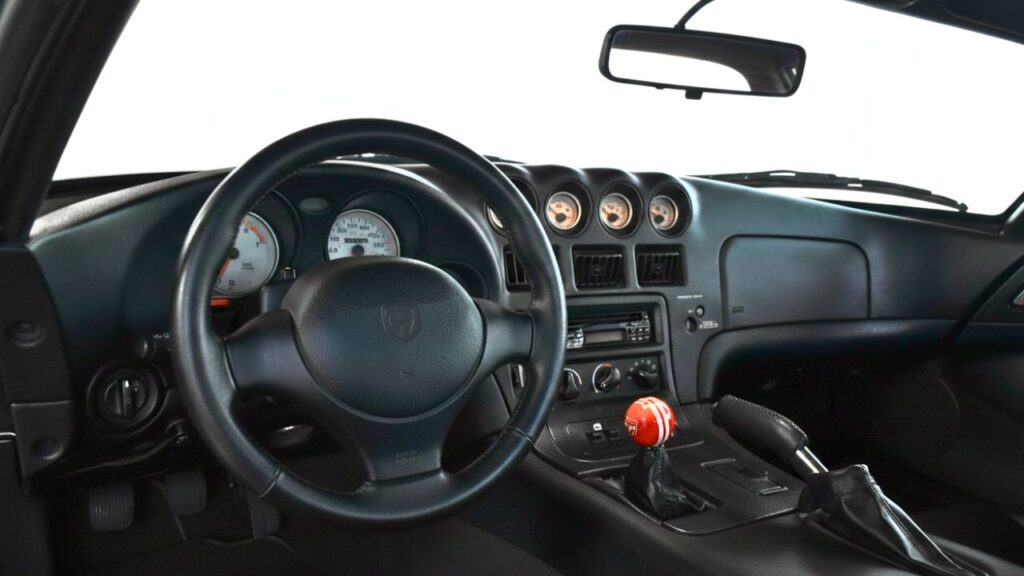
Inside, the Viper is minimalist and driver-focused. Seats are leather-trimmed and supportive, but space is limited. The dashboard is functional rather than luxurious, with analog gauges dominating the cockpit. Storage is minimal, reflecting the car’s focus on performance rather than daily practicality. Despite this, the cabin is ergonomically arranged for enthusiasts who crave engagement over convenience.
Technology and Features
For the year 2000, the Viper’s technology was basic but effective. Standard features include AM/FM stereo, air conditioning, and a manual tilt steering wheel. Advanced electronics such as traction control, stability management, or infotainment systems were absent in most trims, reinforcing the car’s purist ethos.
Safety and Driver Assistance
Safety features were limited. The 2000 Viper relied on dual airbags and a reinforced steel roll bar in the RT/10 for occupant protection. ABS was standard, but there were no modern driver-assist technologies, placing responsibility squarely on the driver.
Driving Impressions
Driving a 2000 Dodge Viper is an exercise in raw skill and focus. The massive torque delivers instant acceleration, while the manual gearbox and rear-wheel-drive setup reward precision. Steering is direct, but the lack of electronic aids means the car can easily challenge even experienced drivers. On the track, the ACR variant shines with upgraded suspension and brakes, while the road-focused GTS blends performance with a slightly more forgiving setup.
Ownership Experience
Owning a Viper is a commitment. Maintenance requires specialized knowledge, fuel costs are high, and insurance premiums reflect its status as a high-performance vehicle. However, the Viper community is vibrant, with clubs, events, and forums offering support and camaraderie. For enthusiasts, the ownership experience is as much about culture and thrill as it is about driving.
Comparisons with Competitors
In 2000, the Dodge Viper’s main competitors included the Chevrolet Corvette Z06, Porsche 911 Carrera, and some European supercars like the Ferrari 360 Modena. While rivals offered more refinement and everyday usability, the Viper’s raw power and aggressive design set it apart as a pure American supercar experience.
Why Enthusiasts Love (and Sometimes Hate) It
Why they love it:
- Unfiltered V10 performance
- Classic American muscle aesthetic
- Track-capable with minimal electronic intervention
Criticisms:
- Low fuel efficiency
- Spartan interior and lack of modern amenities
- Requires skill to drive safely
Special Editions & Cultural Impact
The Viper ACR (American Club Racer) stands out as a track-focused variant with improved suspension, brakes, and aerodynamics. Culturally, the Viper has appeared in movies, video games, and motorsport, cementing its status as a symbol of American horsepower and daring design.
Detailed Specifications Table
| Specification | 2000 Dodge Viper RT/10 | 2000 Dodge Viper GTS |
|---|---|---|
| Engine | 8.0L V10 | 8.0L V10 |
| Horsepower | 450 hp @ 5200 rpm | 450 hp @ 5200 rpm |
| Torque | 490 lb-ft @ 3700 rpm | 490 lb-ft @ 3700 rpm |
| Transmission | 6-speed manual | 6-speed manual |
| 0–60 mph | 4.2 sec | 4.3 sec |
| Top Speed | 168–218 mph | 188–218 mph |
| Fuel Economy | 11/19/14 mpg (City/Highway/Combined) | 11/19/14 mpg |
| Curb Weight | 3,150 lb | 3,250 lb |
| Price (MSRP) | $67,925 | $80,425 |
Frequently Asked Questions
- What engine does a 2000 Dodge Viper have?
An 8.0L naturally aspirated V10. - How fast is the 2000 Dodge Viper?
0–60 mph in ~4.2 seconds, top speed up to 218 mph. - What is the fuel economy?
Approximately 11 mpg city / 19 mpg highway / 14 mpg combined. - Which trim is best for collectors?
The GTS coupe and ACR variants are the most sought after. - Are 2000 Vipers reliable?
Generally reliable with proper maintenance, though high-performance components require attention. - What’s the difference between RT/10 and GTS?
RT/10 is a roadster, GTS is a coupe with improved aerodynamics and rigidity. - Is the 2000 Viper good for daily driving?
Limited practicality and low comfort make it less suitable for daily commuting. - What should buyers watch out for?
Engine and transmission condition, history of track use, and any modifications. - How rare is the 2000 Viper ACR?
Production numbers were low, making it highly desirable among collectors. - Has the Viper appeared in popular culture?
Yes, in movies, video games, and motorsport, enhancing its iconic status.
Final Thought
The 2000 Dodge Viper remains one of the most uncompromising sports cars ever built. Its raw V10 engine, aggressive styling, and analog driving experience make it a car for enthusiasts who crave excitement without electronic filters. While its fuel economy and sparse interior may limit practicality, the thrill, heritage, and cultural significance of the Viper secure its place as a legendary American supercar.